


A Mum’s Guide to Mouth Care
How to look after your little one’s teeth (and gums) from the get-go.
BY HEJIRA CONVERY, KINDICARE
There’s a lot about parenting that you don’t know until you get the gig, and your baby’s oral health is one area that it is important to get your head around.
Those cute little teeth need special care to grow long and strong, and your baby’s gums shouldn’t be forgotten either.
There’s lots of evidence that good oral health is linked to whole-body wellness, and although baby teeth come and go as your child grows, excellent dental care habits last a lifetime.
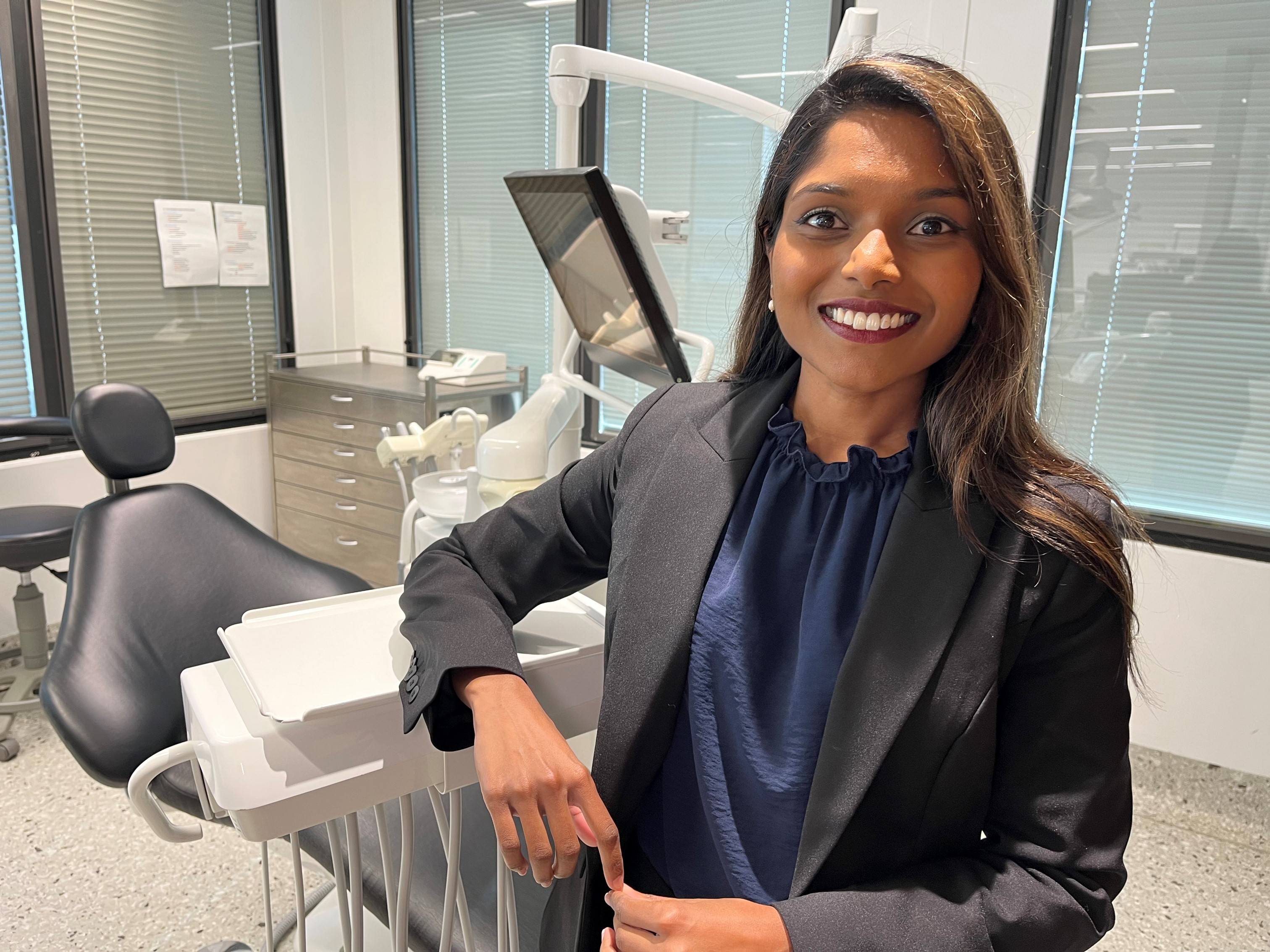
So, here’s a quick crash course in caring for your little one’s mouth, with expert advice from Dr Janani Ravichandran, who’s a dentist and Oral Health Promoter for the Australian Dental Association.
The first thing to know is that you can start gum care pretty early.
Your baby doesn’t need teeth to get a little TLC in the dental department, and once they start on solids, you might like to wipe your bub’s gums with a clean, damp muslin cloth to get rid of any food particles.
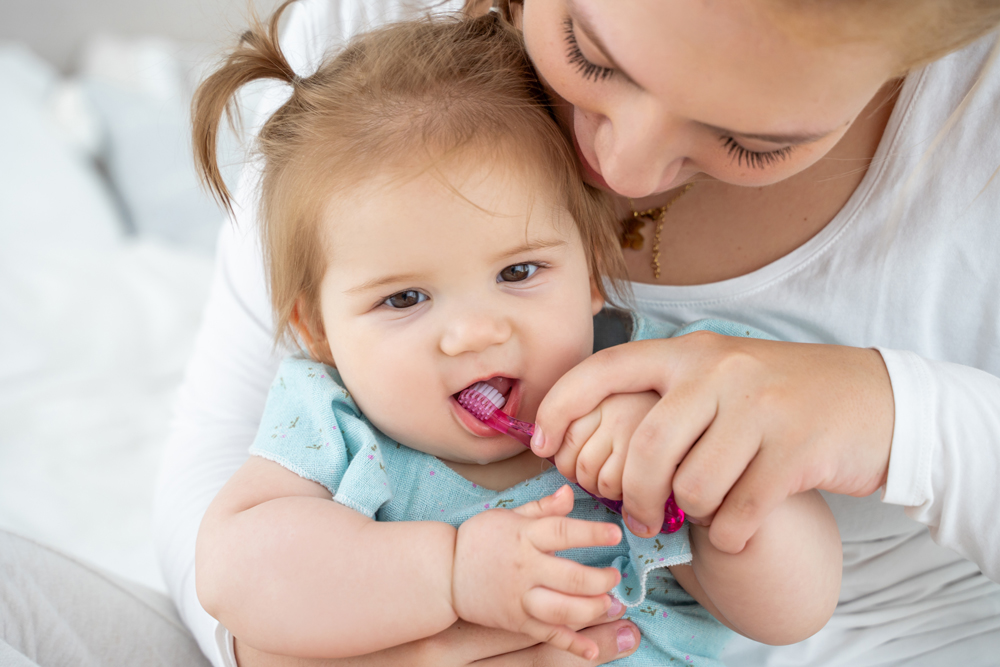
When the first tooth pops through, you can then swap cloth for brush.
Obviously, a huge, wiry toothbrush isn’t suitable.
Instead, grab a soft bristled infant toothbrush, dip it in some water, then gently brush that little bit of white in the gum or growing set of teeny tiny teeth.
Dr Ravichandran says, “You don’t need to introduce toothpaste until your baby reaches 18 months, unless otherwise advised by your dentist.”
Speaking of dentists, you should book your baby in for a check-up when that first tooth arrives, or they turn one (whichever momentous occasion happens first).
And to greatly reduce the chance that your dentist finds tooth decay in your baby’s mouth, make sure your little one only ever goes to bed with a bottle of water, not milk or juice.
Once your toddler is ready for toothpaste, choose one with fluoride, and don’t worry about rinsing.
Dr Ravichandran explains that, “Fluoride is important as it helps strengthen and protect teeth from decay,” and it’s also important that you use a mild toothpaste made for children, not a powerful one for adult mouths.
When it comes to technique, brush your child’s teeth and gums in gentle circles, and teach them to spit out the excess toothpaste after brushing.
Dr Ravichandran says, “They don’t need to rinse their mouth with water. Children are likely to swallow more toothpaste by rinsing than by just spitting out.”
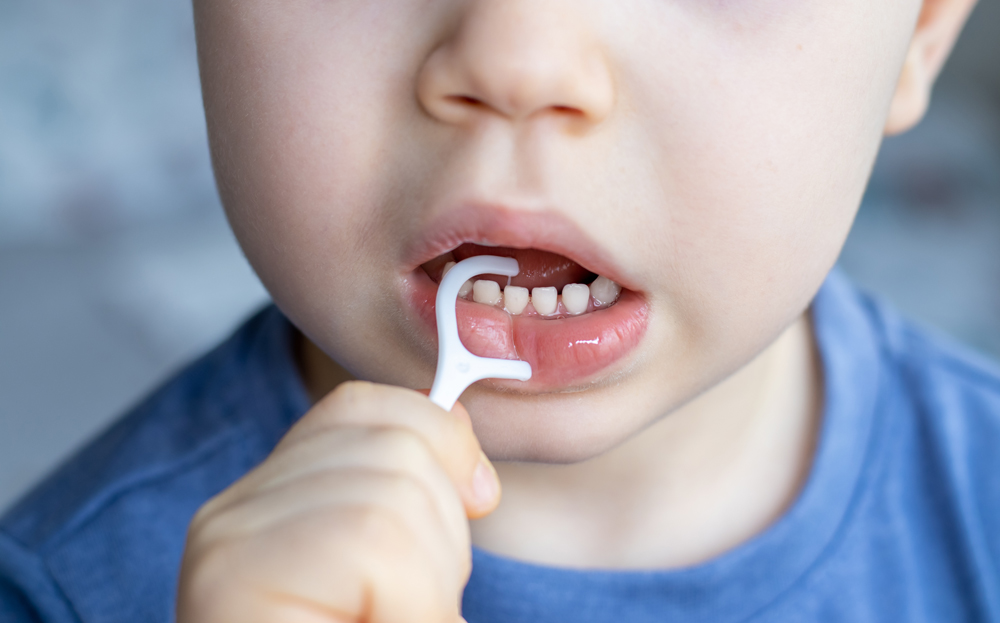
Also, don’t forget to floss!
You can start doing this as soon as your little one has two teeth sitting side-by-side (around the age of two), and a ‘gently does it’ approach is needed.
You might want to get some flossettes to make things easier, and if single-use plastics give you the heebies, then Piksters make some that are 98% biodegradable.
Although self-flossing is outside your toddler’s skillset, they can start to get a grip on toothbrushing.
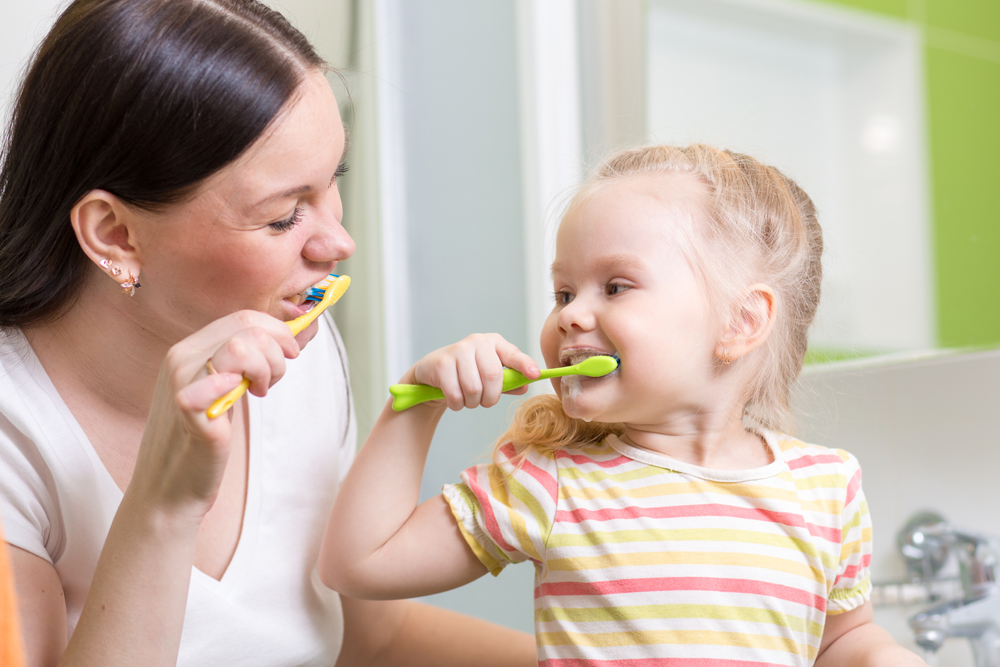
Once your little one is able to hold their own feeding spoon (maybe around the age of 18 months), give them a toothbrush, so they can get a feel for it in their hand and in their mouth.
Then, show them how things are done!
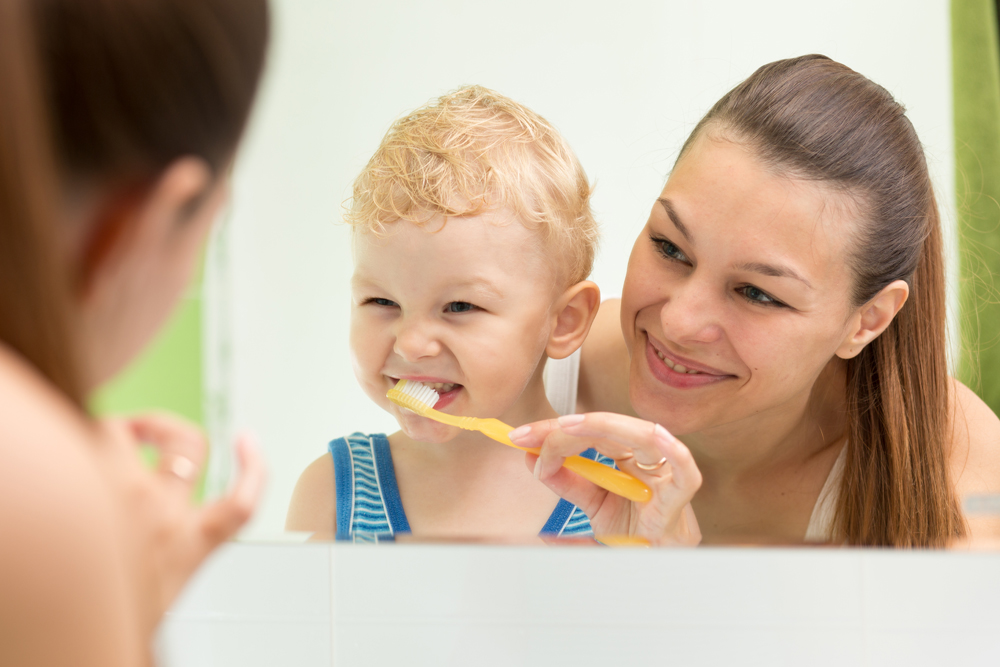
Brush your teeth at the same time as your toddler, so they can copy what you’re doing with your own toothbrush and build their brushing skills.
Practise definitely makes perfect, but be careful not to delegate all dental care.
It’s important that you thoroughly brush your child’s teeth morning and night, for two minutes each time, and keep supervising them until they are totally on top of their tooth care.
As guide, you’ll need to supervise your child until they’re around eight-years-old, or can use a pen proficiently and tie their shoelaces solo.
When they’ve mastered these skills, your child can floss their own teeth as well, and if your kiddo ever tires of toothbrushing before their two-minutes are up, apps like Wiggles Brush and Brush Monster make boring brushing much more fun.
You can switch to a grown-up toothpaste when your child starts getting their adult teeth, around the age of six; and as a family, the best thing you can do is brush your teeth twice a day, floss daily, eat a diet low in sugar, and see your dentist regularly.
A scary 34% of kids aged five to six have tooth decay in their baby teeth, according to the Australian Dental Association, and 27% of children aged five to 10 have untreated tooth decay, so vigilance is key and treatment recommended!
All of this mouth-related info is particularly on point, because Dental Health Week is coming up.
It runs from 7 to 13 August in 2023, and this year’s message is that mouth, mind and body are all connected.
The experts tell us that bacteria in the mouth can travel to other parts of the body; inflammation in the mouth can add to our body’s overall inflammation; and there’s a link between mouth problems and some serious health issues, including heart disease, diabetes and Alzheimer’s disease.
There’s also evidence that poor oral health may be linked with premature births and low birth weight, so you can actually care for your baby before they’re born, by caring for your own mouth.
Happy brushing, and remember to floss every day – not just when you’re about to see a dentist!