

Expert Toilet Training Tips
Paediatrician, Dr Lexi Frydenberg, shares ways to make toilet training easier for you and your preschooler.
BY HEJIRA CONVERY, KINDICARE
Moving from nappies to undies is a big step for your little one, and if you’re new to potties and pull-ups, then toilet training will also feel like a big step for you.
It requires vigilance, patience, communication and lots of wet wipes, but everything will be ok!
In time, your child will learn the ins and outs of toileting, and for now, Dr Lexi Frydenberg has some tips to make toilet training easier for both of you.
Dr Lexi is a Paediatrician at Victorian Children's Clinic, and a special guest on Late Night Notes.
And although toilet training is about number ones and number twos, below she answers three key questions to help you approach toilet training in a positive way.
QUESTION 1: How can I tell if my child is ready for toilet training?
Dr Lexi says most children are ready for toilet training somewhere between the age of two and three, and signs that your child might be ready include:
- Staying dry for longer periods during the day
- Showing an awareness that they’re wet or soiled
- Telling you they’ve done a wee or poo (or that they’re about to)
- Being able to follow simple instructions, and
- Showing some interest in the toilet or copying other people (like Mummy, Daddy or their siblings).
If you see these signs, that’s great, but if your child isn’t quite there, there’s no rush.
Dr Lexi says, “Toilet training works best when a child is developmentally ready. Starting too early can lead to frustration both for the child and for the parents,” so wait till the signs are right!
QUESTION 2: What are five ways to make toilet training easier?
Once your child is ready to start toilet training, Dr Lexi’s top tips are to:
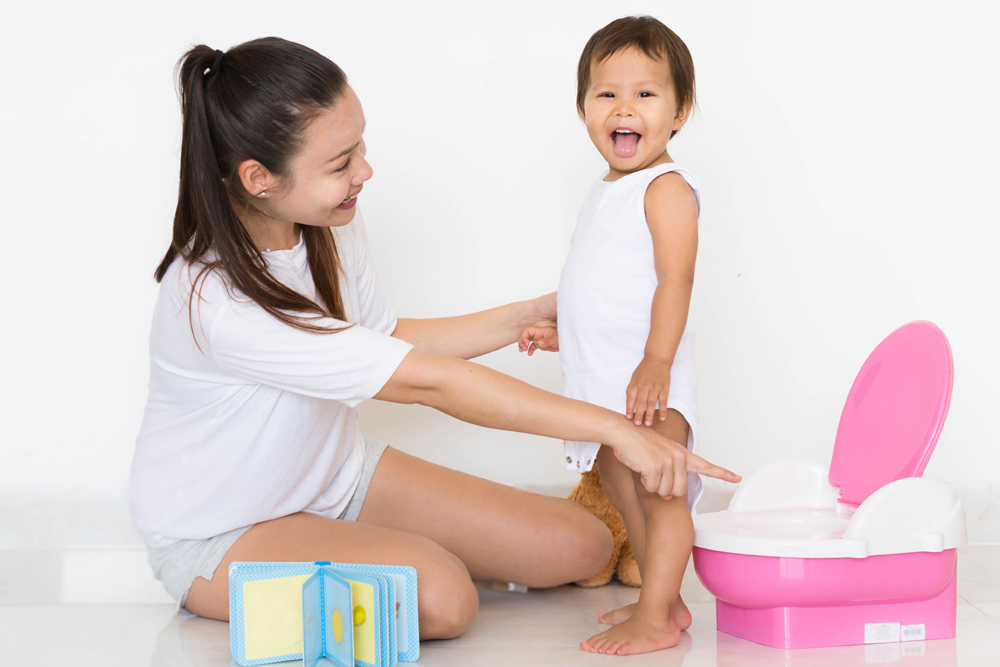
1. Get everything (and everyone) prepared
She recommends that you, “Buy a potty or toilet insert and stool, go shopping with your child to choose undies they like, dress them in clothes that are easy to pull down, and explain to your child what’s going to happen,” so there are no surprises.
2. Keep calm and stay positive
Try not to sweat the small stuff. Instead, praise your child and reward their effort when they try to go to the toilet, or tell you they need to go, even if it doesn’t result in a wee or poo in the toilet.
3. Stick to a routine
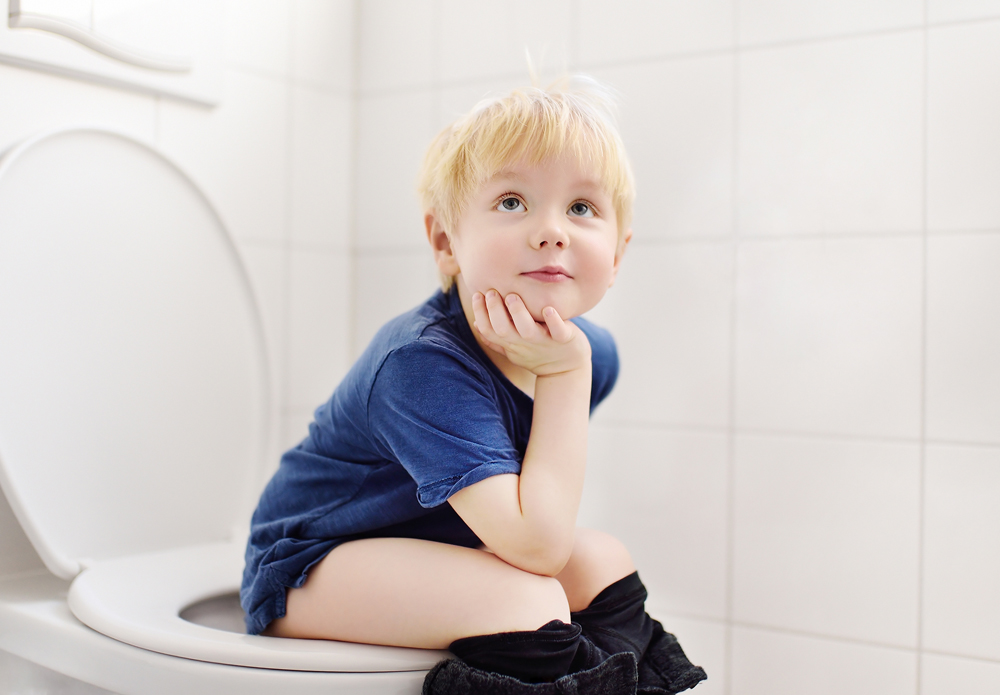
Dr Lexi recommends that you, “Sit your child on the toilet at predictable times, five to 10 minutes after meals, before bathtime and before leaving the house or going for a drive,” to get into a good rhythm.
4. Expect accidents
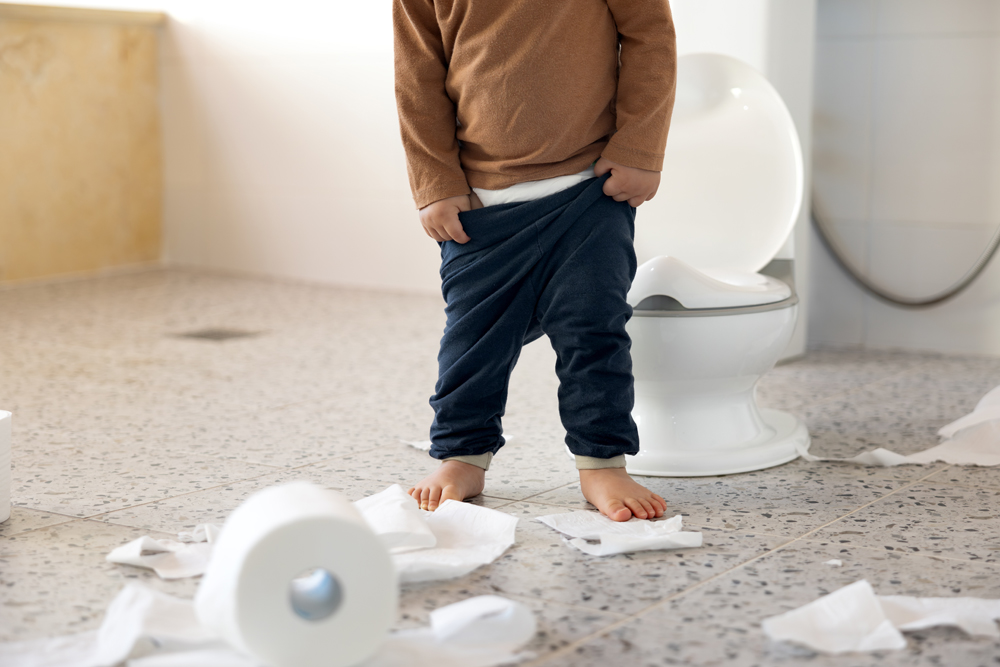
Whether they happen at home or in the middle of Aisle 3, Dr Lexi says, “Accidents are part of learning. So, try not to blame or make your child feel bad when they have an accident. Stay matter-of-fact about it, and just help them change out of their wet or soiled clothes and encourage them to try again.”
5. Watch for, and manage, constipation
Although you’ll be very focused on what’s going into the toilet, potty or undies, it’s also important to notice what’s not on the move.
Dr Lexi says, “Hard or painful stools make toilet training very challenging. If pooing is painful, children will avoid the toilet and hold on. Wee and poo accidents are more common when your child is constipated.”
And to see what might help, check out this Raising Children Network article.
QUESTION 3: What should I do if toilet training really isn’t going well?
You might have heard about a tiny tot who farewelled their nappies in a nanosecond, but in reality, toilet training is tricky for a lot of families, with a ‘two steps forward, one step back’ kinda vibe.
Although this can be frustrating, make sure your child feels supported (not embarrassed), and know that it’s ok to take a break if things aren’t going well.
Dr Lexi says, “If there are frequent battles, distress, or repeated accidents despite consistent effort, it’s often a sign that your child isn’t quite ready, and that’s okay.
“It can help to pause for a few weeks or even months and try again later. A short reset can make a big difference.
“And if you keep trying without success, and there is ongoing wetting well beyond the expected age range, it’s worth speaking with your GP or paediatrician.”
Lots of luck with it all, and a big thanks to Dr Lexi for her great advice.