


Lunch Going Uneaten?
Why young children don’t eat their lunch, and how to make food more palatable this year.
BY HEJIRA CONVERY, KINDICARE
Some things that come back from childcare are great, like finger paintings and funny stories, but if your child’s lunch keeps returning uneaten, this isn’t ideal.
Your under-five needs good food in their tummy to learn, grow and thrive; and a lunchbox which regularly comes back with all its contents, isn’t conducive to healthy nutrition.
Try not to worry, though, because there may be a very simple reason why your child isn’t eating your lovingly prepared food, and once you get to the bottom of this, you can find a solution!
The start of a new childcare year is a great time to do this; and Leanne Elliston, Senior Dietitian at Nutrition Australia, says there are four common reasons why your little person’s lunch may come back un-munched:

Reason #1: You might be packing too many new foods.
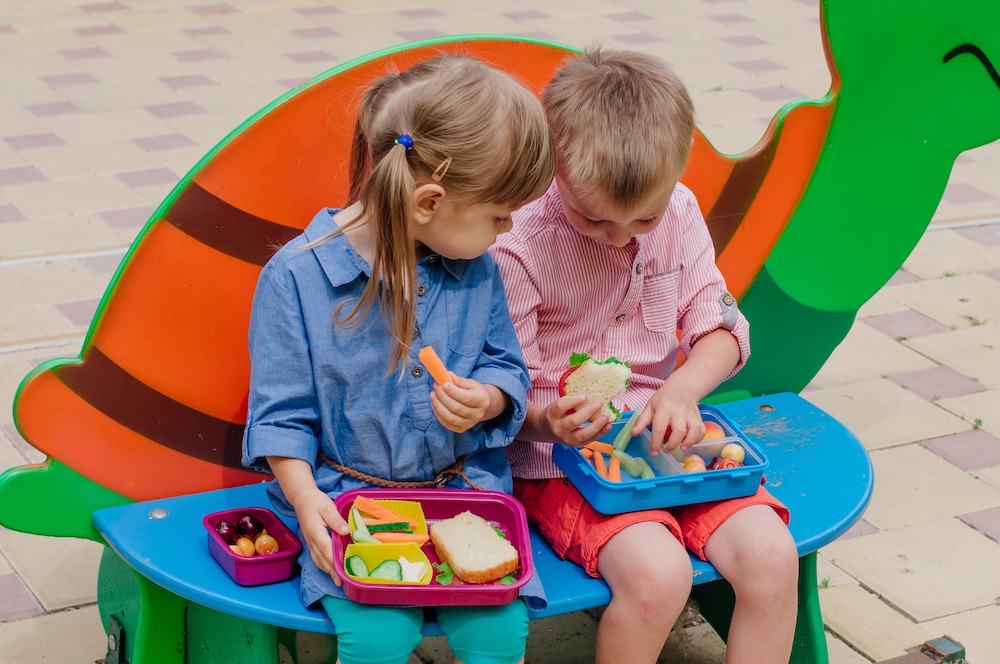
If you have a bento box with lots of compartments, or a plethora of tiny Tupperware containers, it’s tempting to fill each and every one with a different delicacy.
However, sometimes this is too much, too soon.
Your young child is still familiarising themselves with the look, feel and taste of various morsels, and trying to tick off too many food types in one lunchbox may scare them off.
Leanne says, “Being confronted with a smorgasbord of food can be very daunting for your under-five, because it’s hard for them to know what to eat, and if to eat at all.”
What to do?
To solve this problem, focus on packing foods your child is already familiar with and comfortable eating.
It’s important to include something from each of the five food groups, but you don’t need to introduce dragon fruit and curried egg sandwiches just yet!
Instead, Leanne suggests that you pack some simple fruit, dairy, vegetables, lean meat (or an alternative) and wholegrains.
If you are trying something new, make sure you also pack a food you know your child will eat (like a trusty cheese sandwich), and remember that it can take up to 15 tries before a child will go for a new food.
Reason #2: You may be packing too much food.
Your under-five has a little tummy, and although you might be loading up their lunchbox with the best intentions, providing more food doesn’t necessarily increase the chance that they’ll eat something.
Leanne says, “Too much food in your child’s lunchbox can be overwhelming, and instead of eating what takes their fancy, they may simply eat nothing at all.”
What to do?
The obvious solution to this is that you need to be realistic about what your under-five can actually eat!
You’ll find recommended serves for different ages here, and to ensure your eyes aren’t bigger than your child’s tummy, Leanne says it helps to give them a say in what healthy foods go into their lunchbox.

Reason #3: Your child may be struggling to access their food.
Fine motor skills take time to finesse, and while you may be able to unlock a lunchbox with the greatest of ease, this task might be troubling for your tyke.
Leanne explains that, “Some lunchbox containers and packages are tricky for little fingers to open, and many fruits and vegetables can also be very challenging for children to peel or bite into.”
What to do?
Now’s the perfect time to test your child’s handling of their usual lunchbox or food container, and if they’re struggling to open a latch or unscrew a lid, then invest in a new, easy-access vessel.
Leanne says your child will be more excited about eating from a lunchbox they’ve helped to choose, so look at the options together, deciding whether they’d like a little bento box that neatly divides foods, or a spacious design with room for a full-sized sandwich, banana and more.
Also, take a fresh look at your food presentation.
Leanne says peeled or easy to peel fruits are great for childcare, and baby vegetables, (like baby corn) are appealing.
Cutting up some fruit and veg can also make it more tempting, easier to access and less likely to cause choking.
And don’t forget utensils!
Make sure you pack a spoon or fork for foods that need them, because this teaches good manners, reduces the spread of illness, and makes tricky meals, like rice and yoghurt, much more manageable.
Reason #4: Your child might be too busy playing to bother with eating.
Food isn’t front of mind for many children, and once you throw toys, games and friends into the mix, playing is often much more important than eating!
Leanne says, “Most early learning centres are very good at scheduling allocated eating times, with designated sit-down areas,” but it is possible that your child will continue to focus on fun when they should be motoring through their meal.
What to do?
You’ll have to trust your child and educators on this one!
Leanne explains that, “Children’s internal sense of hunger, appetite and fullness is stronger than adults, so you need to trust they will eat the right amount to grow well.”
Quality educators are also very aware of what little learners are eating (or not eating), and they know how important it is to provide the time and space for eating, without pressuring children to sit down for ages and eat every last crumb.
Some services follow progressive mealtimes, which allow littlies to eat when they want to eat, and Leanne says, “If a child would rather play than eat, then a foodie game, story or song before mealtime sets the mood for food.”
The above strategies help to stop food from bouncing back, and it’s also important to keep things fresh – both literally and figuratively.
No-one likes food that’s soggy when it should be firm, or hot when it should be cold, so keep different foods tasty by separating them into lunchbox compartments or mini-containers, and store everything in an insulated bag.
Also, though it’s totally normal for young children to find a food they like, and stick to it, you can freshen up the menu when they’re ready.
The Healthy Lunchbox Week website is packed with lunchbox inspo and recipe ideas, and if your child wants the same food ad infinitum, then don’t fret!
Leanne explains that, “Sometimes, children will stay in a rut and only want the same food every day, and that is ok. Keep offering a little bit of variety, but don’t be too concerned if they keep coming back for the same lunchbox each day. Just make sure what you serve is healthy, and steer clear of highly processed, packaged foods as much as you can.”