


The Serious Business of Child’s Play
The serious business of child’s play.
BY BONNIE LAXTON-BLINKHORN, KINDICARE
Play is an immersive experience and if you’ve ever tried to distract a toddler fully engaged in flying to the moon in a cardboard box, you’ll know what I’m talking about.
The natural curiosity that drives children to experiment, imagine, create and build is a wonderful thing to observe and as parents we have front row seats. Most parents have a good understanding of the importance of play in children’s development and how it builds a strong foundation for life-long learning, but did you know there are different types of play, and each has a role in this process?
KindiCare spoke to Jessica Krishna Area Manager for Cherry Bridge Station Early Learning to learn more about why play is important for children, and the different types of play that children engage in.
Jessica has a long history in early learning having worked her way up from room lead, to director, to the area manager role she has now, importantly she has worked in a variety of settings with children of all ages.
Jessica knows how important play is for young children as she observes children engaged in their ‘important work’ every day.
Jessica says play is the catalyst for learning and she says early education centres provide a range of opportunities for both structured and unstructured play and that this can happen at home as well.

“Play is the vehicle that stimulates and structures the developing mind. It is influential in how a child’s schema in concepts is formed and creates dispositions for curiosity, exploration, wonder and awe.
“It is important we nurture and at times direct children’s play through intentional teaching to present the best opportunities to grow and expand their minds.”
Structured vs unstructured play
According to Jessica, structured play tends to be goal orientated and adult led. In early education services it often follows a sequence where an educator provides direction and there is a known outcome children are working to achieve. This is also described as intentional teaching.
Unstructured play is child initiated. Play occurs without the direction or interruption of an adult. The role of the educator or parent during unstructured play is to provide children with a sense of agency to experience freedom in decision-making and to give them an opportunity to follow their own interests and curiosity.
The outcomes from unstructured play are not restricted to a specific goal and it is an open-ended process with range of possible outcomes.
A balance between structured and unstructured play forms the basis for successful ongoing learning.
“Structured play offers guided learning that makes experiences more purposeful with an aligned goal. It extends a child’s thinking and develops their existing knowledge. At times it can challenge children and encourage them to persist with difficulties and problem solve.
“Unstructured play is based on self-direction and achievements can build a child’s self-esteem. It is truly a wonderful form of play as it allows a child to gain an understanding in who they are as they develop their own innovative ways to think and interact with the world that surrounds them.”
Playtime: The Cherry Bridge Station way
High-quality early education services offer children a range of opportunities for both structured and unstructured play across the day and often these decisions are child led and based on current interests within the group.
We asked Jessica to tell us how playtime works at Cherry Bridge Station, which has four early learning services, each with a unique approach to delivering play-based learning to children.
Jessica says structured play opportunities are based on children’s interests, skill sets, and developmental abilities and the language and literacy programs often focus on educator led story telling though picture books, flash cards and digital technology.
“We use this method to intentionally build on children’s receptive and expressive skills with a goal in mind,” said Jessica.
Unstructured play at Cherry Bridge Station happens spontaneously in different moments of the day.
“We allow plenty of time for uninterrupted child-initiated play. This may involve a child using their creative mind to express their thoughts and feelings through the mixed media of paint, crayons, and collage materials. At other times it could be exploration outdoors with open-ended resources such as pebbles, cardboard boxes, plastic pipes, and sand.
“Each child will use their imagination to create items of interest. Educators stand back and observe the actions and the operation of their thought processes. It is intriguing to see how young minds works and what each child achieves.”
Unsurprisingly striking a balance between structured and unstructured play is important and at Cherry Bridge Station both morning and afternoon sessions have time for both, however, flexibility is key.
“Play is not linear. You cannot predict the direction or time needed in play-based learning. Therefore, our routines are flexible and adaptable to meet the children’s needs.
“On occasions our educators are asked to save a built creation so children can return to it. We always respect the child’s voice and create opportunities for children to re-visit their play. Each day is unique, and it is important to be flexible and understanding.”
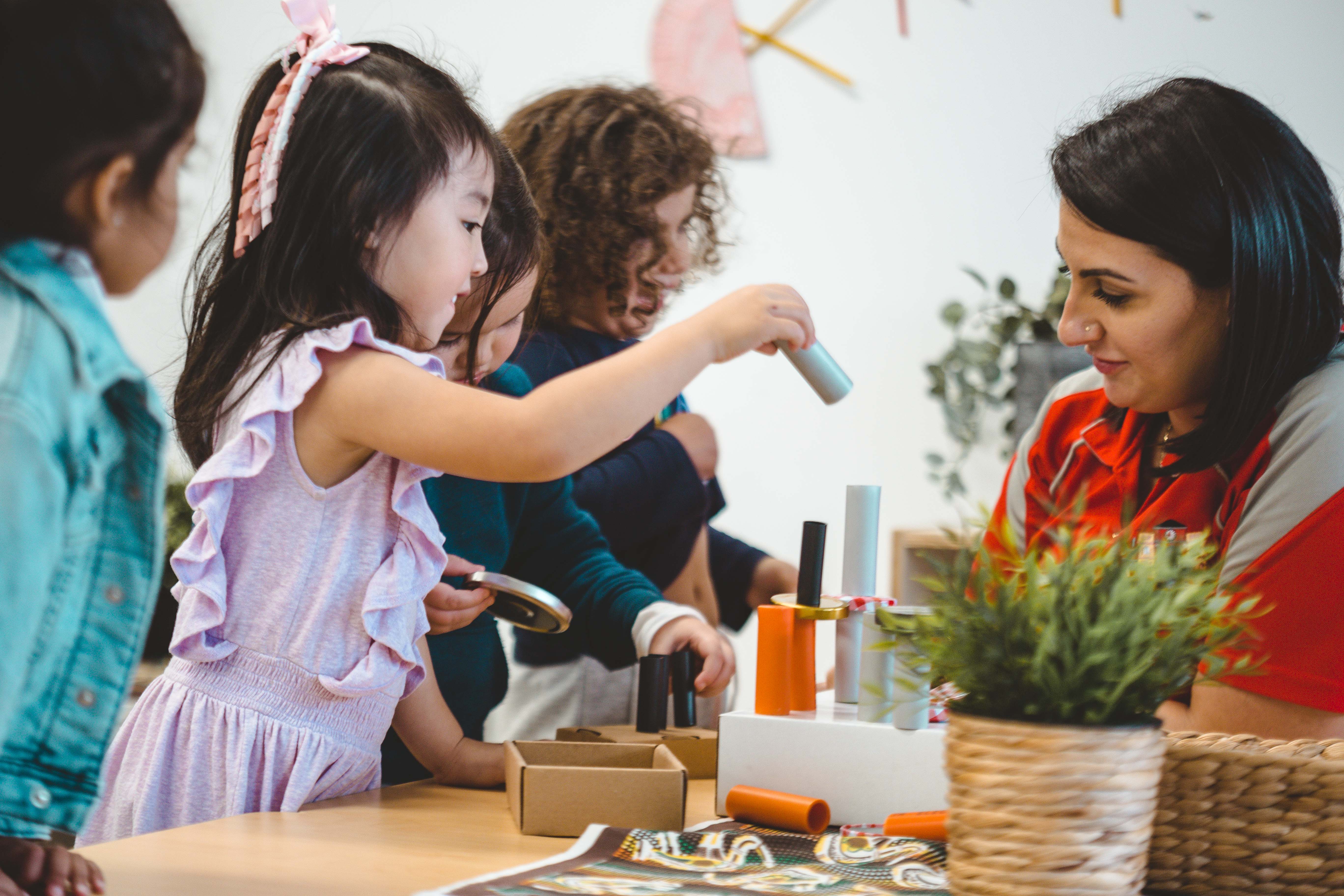
As parents are well aware structured and unstructured play often occur simultaneously, with one evolving from the other, Jessica says this is a clear demonstration of the thirst for knowledge children have and provides a chance for children and adults to co-construct learning.
“Sometimes we start a structured program with intentional teaching and a clear goal in mind, and a simple question from one of the children can change the course of the learning outcome and make it more child focused. The two then become one.”
While educators are trained to deliver structured play-based learning opportunities for children, Jessica says there is plenty parents can do at home, by building structured play into the daily routine.
“Aim to set aside small blocks of time in your family schedule. Structured play does not need to be complex. A picture book exploring the characters and illustrations is great or building with wooden blocks and counting how many blocks used is another example. These are all simple activities that boost children’s knowledge and build a foundation for successful learning.”
There are no hard and fast rules when it comes to play (phew!!) but Jessica says that in her experience children often benefit from around two hours of structured play and around three hours of unstructured play across the day. These blocks of time can be broken up.
“It is about quality and not quantity with structured play. Three hours of pure unstructured play is ideal for children to allow exploration with minimal interruption and to experience a continuous flow.
“Regardless of structured vs unstructured play – we as adults need to foster an open mind and be supportive of children’s methods in playing. Play comes with no set expectations and we need to embrace this.”