


Cooking up a storm.
The essential role of chefs in early learning services.
BY BONNIE LAXTON-BLINKHORN, KINDICARE
They say the kitchen is the heart of the home and we say it’s also the heart of the early education centre.
These hubs of wholesome happiness have the important job of nourishing large groups of children with wildly different tastebuds every.single.day! This is no mean feat, and it takes a special sort of person to run this kind of service.
At KindiCare we think early learning chefs and cooks deserve their day in the sun and to this end we are delighted to introduce you to the very excellent Edward Gomez, in-house chef at Nido Early School Palmyra.
Edward joined Nido Palmyra around 16 months ago, when the new, purpose-built centre opened in Perth.
Currently, Edward is responsible for preparing meals for around 60 ‘starving-hungry’ children daily, including morning tea, lunch and afternoon tea.

We spoke to Edward to learn why he made the leap from hospitality to early learning and what advice he has for people considering the same pathway.
Edward, who is from Central America, started his professional life as a restaurant chef in Sydney, working as everything from a grill-master to a pastry chef, and when he made the move to Perth three years ago, he also made the transition to the early learning sector.
One of the main advantages of switching to the early education and care sector is that Edward is now in charge of his own kitchen.
“This gives me the freedom to be creative with my cooking and bring my culture into the meals I make, which is not always easy to achieve in a normal hospitality job,” he explains.
Edward said another huge advantage is that it makes it easier (and way more cost effective) to manage the big juggle between work and family life.
“One of the reasons I work at Nido is so I can watch my son grow up. As an employee I have access to reduced childcare fees, so my son attends the same Nido where I work.
“Additionally, working school hours allows me to have energy in the evenings to spend quality time with him.”
All Nido employees receive huge staff discounts on their childcare fees, with some of them paying as little as $2 per day, depending on their eligibility for Child Care Subsidy.
Apart from a better work-life balance, Edward says working in early learning suits him down to the ground as it is very friendly, and he really enjoys interacting with the children.
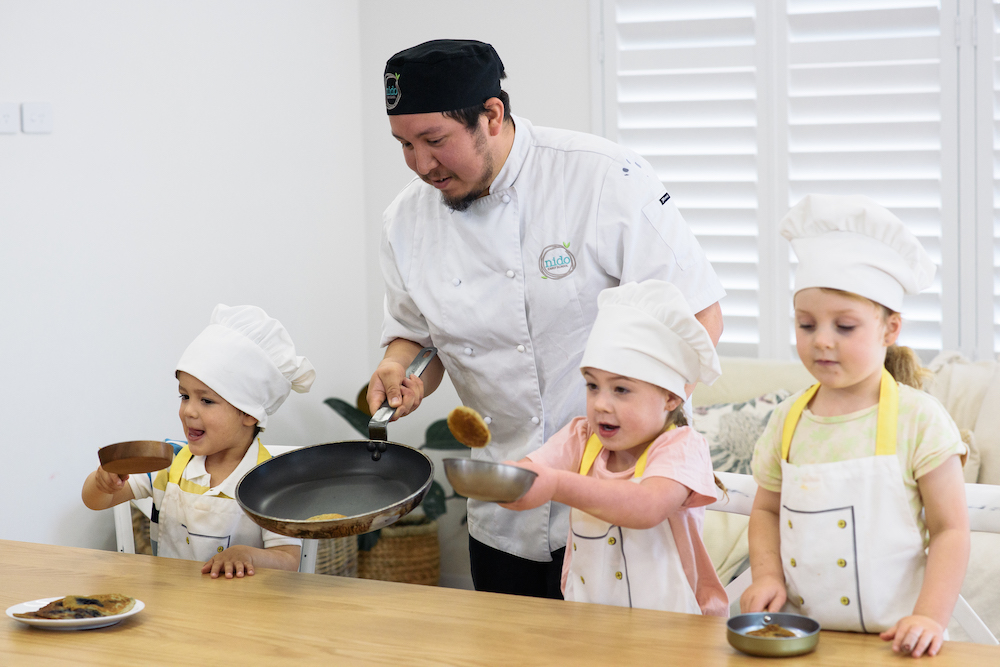
“I love watching the children happy and enjoying the meals I cook, it’s definitely the best part of the day,” he says.
In addition to sharing mealtimes with the children, Edward runs cooking classes with groups of budding chefs and says he has an important role in supporting all the children develop a happy and healthy relationship with food.
Another one of Edward’s responsibilities is designing the weekly menu for the service and he says infusing the menus at Nido Palmyra with inspiration from his Latin heritage allows him to really exercise his creativity.
“It’s great being able to bring my culture into the food I cook for the children. I like to design menus that are based on seasonal ingredients and full of Latin flavour and tomatoes.”
Edward says he would encourage anyone with a background in cooking to consider a role in the early education sector, highlighting the less stressful hours, the supportive environment and the opportunity to really make a difference in the lives of children.
While it is possible to work as a cook in an early learning service without formal qualifications holding a Food Safety Supervisor Certificate and Certificate III in Commercial Cookery will make it easier to get a job.
Some services support staff to achieve qualifications while working and if you are interested in exploring this career option then it might be worth investigating this pathway further.
Chefs and cooks are also required to hold a current working with children check, in accordance with the laws and regulations in their state or territory.
“Working as a childcare chef is an amazing experience, you should definitely do it, it’s really rewarding being part of children’s lives and seeing them grow and learn to appreciate food!”