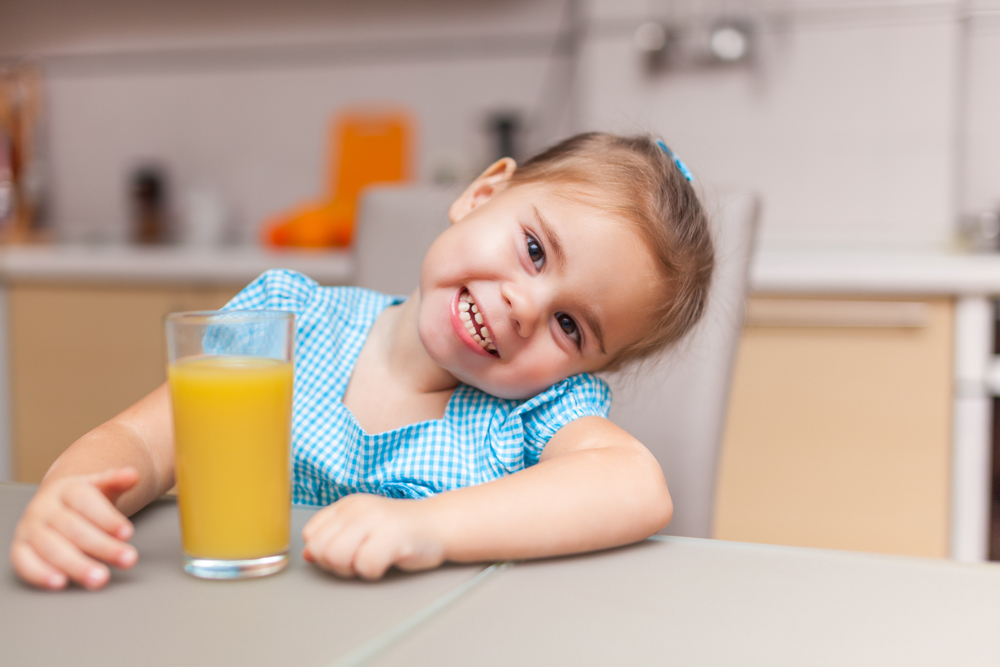


Does your Kid Love Juice?
See why fruit juice isn’t so good for children’s oral health, and what to serve instead.
BY HEJIRA CONVERY, KINDICARE
As parents, we know that soft drinks and sport drinks aren’t great for young children’s teeth, but there’s a bit of a disconnect when it comes to fruit juice.
On one hand, the Australian Dental Association (ADA) has found that 87% of surveyed parents are aware that drinks containing natural sugars (like fruit) lead to tooth decay.
While on the other hand, lots of parents pour juice into cups, or pop those juice boxes, for our children’s drinking pleasure.
And we do this regularly.
The ADA has found that around 27% of children consume fruit juice every day, and 38% of kids drink juice two to five times per week.

This means there’s a gap between what we know and what we serve, and as consumers, we’re not totally to blame!
Most of us aren’t trained nutritionists, so it can be hard to tell how much sugar is actually in a fruit juice.
And although the ADA is calling for labelling changes to make hidden sugars more obvious, there’s no doubt that ‘natural’ or ‘healthy’ fruit drinks can damage children’s teeth.
Dr Monica Farrelly, the ADA’s Oral Health Promoter and Sydney dentist explains that, “even though fruit juice may come from natural sources, it still contains sugars in the form of fructose, which can feed harmful bacteria in the mouth, producing acids that attack teeth enamel, leading to cavities and erosion.”
Drinking a lot of sugar in fruit juices and soft drinks can also have long-term ramifications when it comes to a child’s body weight and metabolism; and it’s not just sugar we need to be worried about.
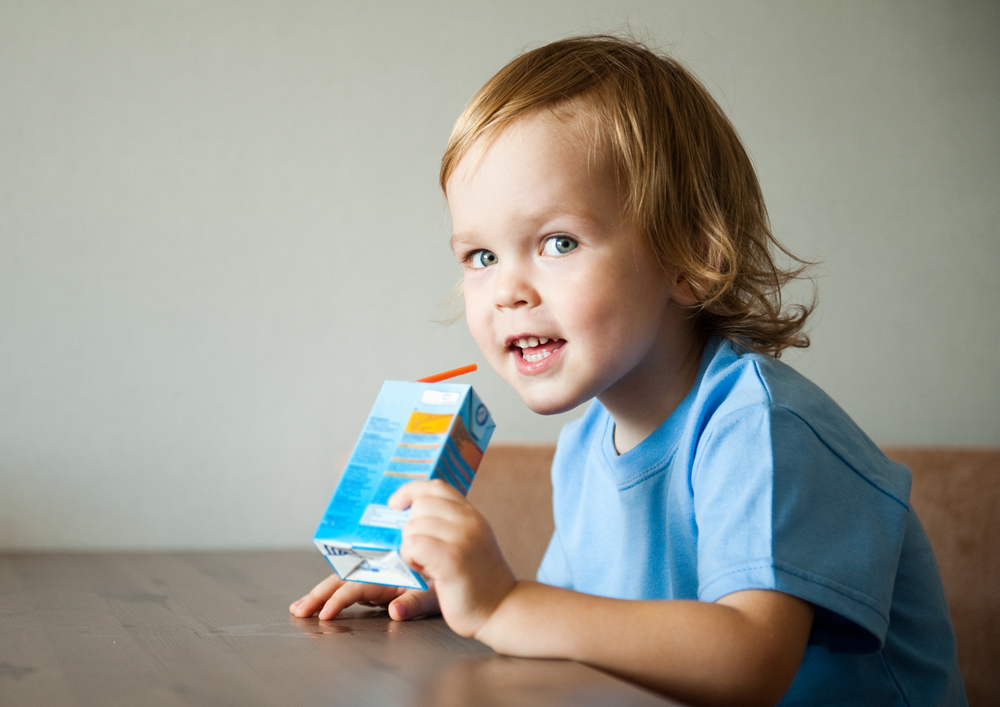
Fruit juice can also be very acidic, and Dr Farrelly says drinks with high levels of acidity (even if they’re lower in sugar) can cause significant tooth erosion.
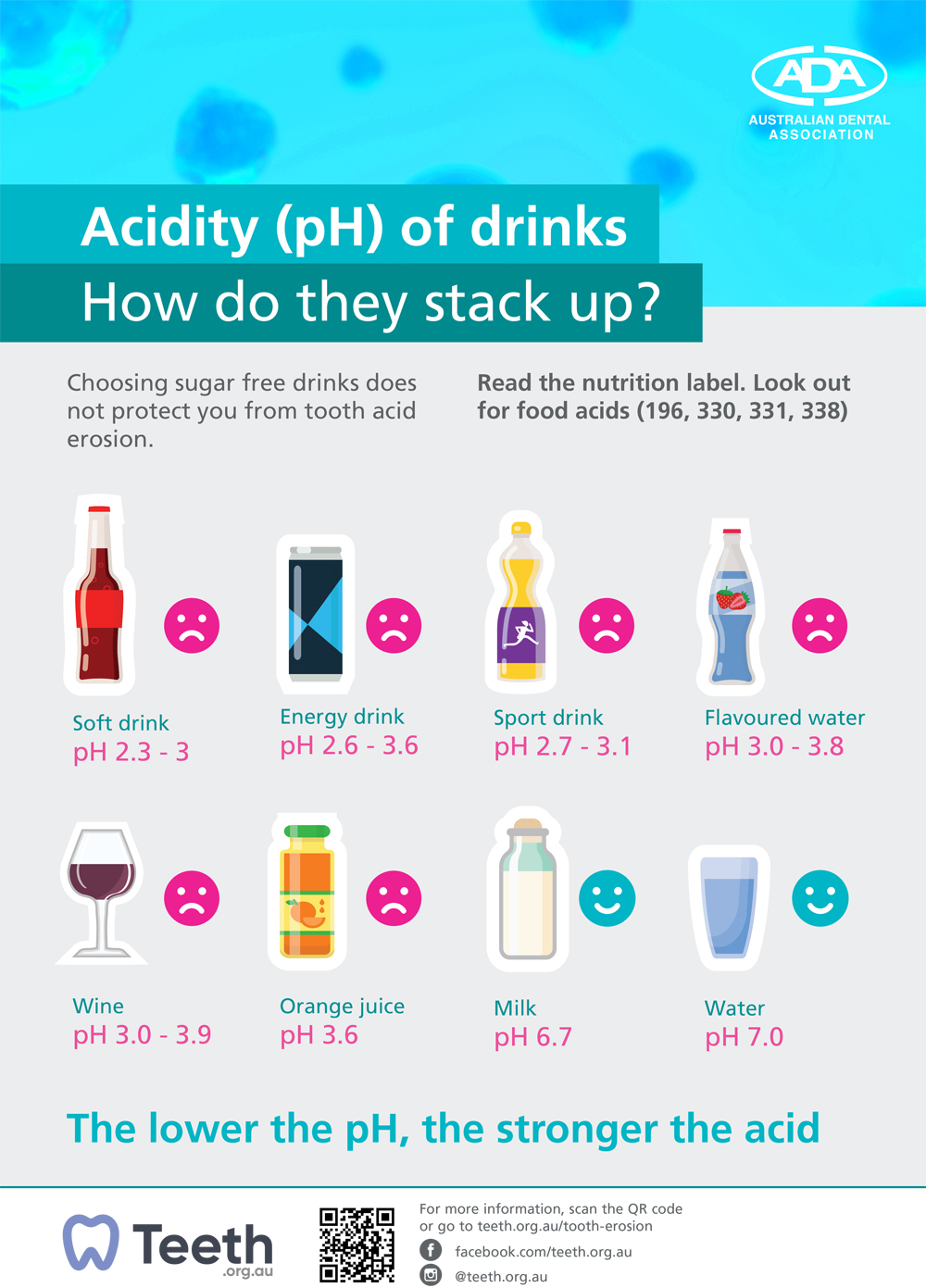
Without getting too scientific, she explains that the lower the pH of a drink, the higher the acidity, and the more the drink will contribute to tooth decay.
So, with this in mind, Dr Farrelly says the best drinks for children are always water, which has a neutral pH of 7, and plain milk, which has a pH of 6.7.
Below, you’ll see that orange juice is much more acidic than water and milk, with a pH of 3.6, and if you’re tempted to give your child a soft drink, then the acid in this is pretty close to vinegar (which has a pH of 2.4 to 3.4)!
At the end of the day, sugary and acidic drinks aren’t great for anyone’s teeth, but children's developing teeth are particularly vulnerable to decay when these kinds of drinks are consumed a lot.
The ADA has found that one in three kids aged five to six have decay in their primary (aka baby) teeth, and one in four kids aged six to 14 have experienced it in their permanent teeth.
Fortunately, there some easy ways to care for young teeth; and with Dental Health Week 2025 starting on Monday, 4 August, the ADA is encouraging us parents to pay close attention to our children’s diets, for the good of their oral health.
The ADA’s Snacking fact sheet contains tips for tooth-friendly munching.
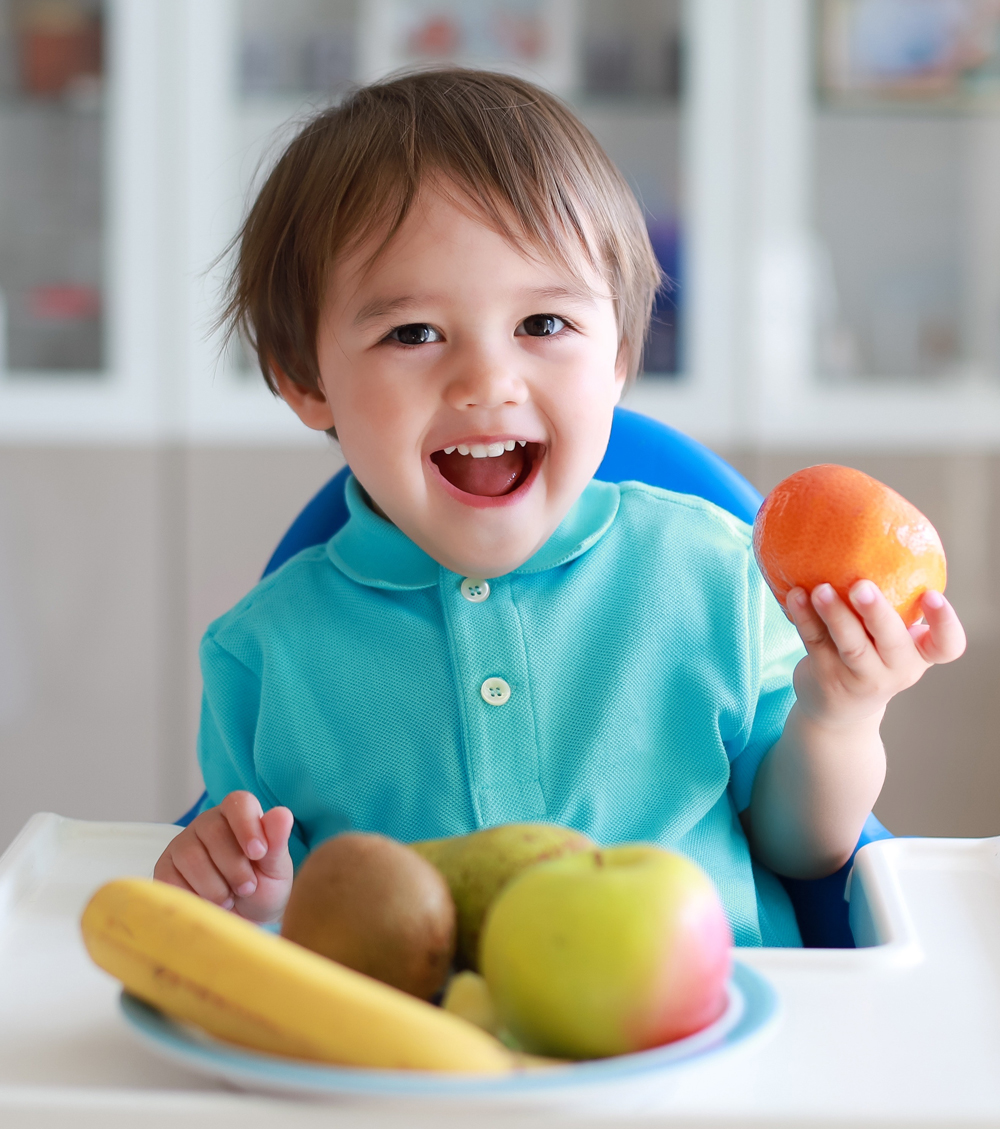
And when it comes to juice, the ADA recommends that we give our children a piece of fresh fruit and a glass of water, instead of fruit juice, because then they’re getting the roughage from the fruit, as well as the vitamins.
It’s also really important to actively care for our kids’ teeth.
This means ensuring your child’s teeth are brushed twice a day and flossed daily, and taking them for regular dental check-ups.
Tooth care is also really important for your baby or toddler, and the ADA has some Pro Tips Videos to help you look after your tiny tot’s teeth, and care for primary teeth just as well as permanent ones.
So, have a look at those parent-friendly resources, and think twice before pouring that big glass of fruit juice!