


Feel Better Fast
Simple tips to boost educator health and wellbeing.
BY BONNIE LAXTON-BLINKHORN, KINDICARE
Many early learning services now offer yoga as a part of the daily routine, and whether children are practising rising sun breath or head down bum up in a downward facing dog, they seem to love it.
In addition to being enjoyable, yoga helps children with self-regulation and relaxation and may also support greater mindfulness.
With a growing body of evidence demonstrating the effectiveness of yoga as a tool for improving physical and mental wellbeing and its increasing acceptance in early education settings, we sought to learn how early educators could also come to benefit from yoga and breathwork.
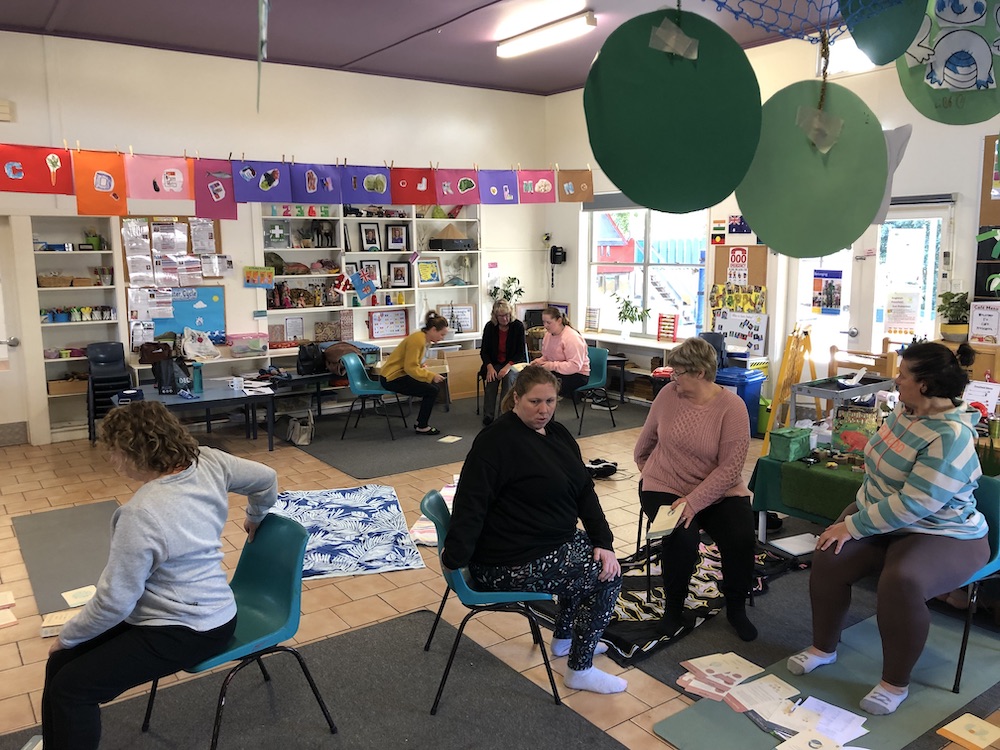
To help answer this question we spoke to Beth Borowsky, CEO and Founder of The Karma Class, a company dedicated to improving the health and wellbeing of students and teachers through yoga, breath and mindfulness.
As a Montessori educator, and teacher trainer with more than 35 years’ experience, Beth has plenty of experience in the early education space and works closely with services to integrate yoga and wellbeing into the daily routine.
Why is wellbeing such a hot topic right now?
Early education services played an important frontline role in supporting Australian families through the COVID-19 pandemic, and this took a toll on the health and wellbeing of many educators.
With staff shortages now having a direct impact on large numbers of providers across the country, initiatives to support greater wellbeing among staff make good business sense, but they are also good morally.
“We are at a crisis point in the early learning sector,” says Beth.
“It’s vital that employers start to look seriously at the social, emotional and environmental factors within their organisation because they play such a major role in the psychological and physical health and wellbeing of educators.”
The good news is that a few small changes can have a big impact, and initiatives to support better wellbeing among educators aren’t costly or onerous to introduce.
In addition, the benefits will often be felt very quickly and as Beth explains healthier and happier teachers directly benefits the children.
“If we want our children to thrive, we need our teachers to be thriving first. Teaching is a self-less profession – you are giving your energy ALL day long, so health and wellbeing support is critical to maintaining dedicated, inspiring, and healthy staff.”
“If you’re not given ways to replenish, and tools to manage your physical and mental health and wellbeing, you start to feel depleted. That depletion shows up as short temperedness and intolerance, and regular days off, and the kids feel the effects of that.”
What to do?
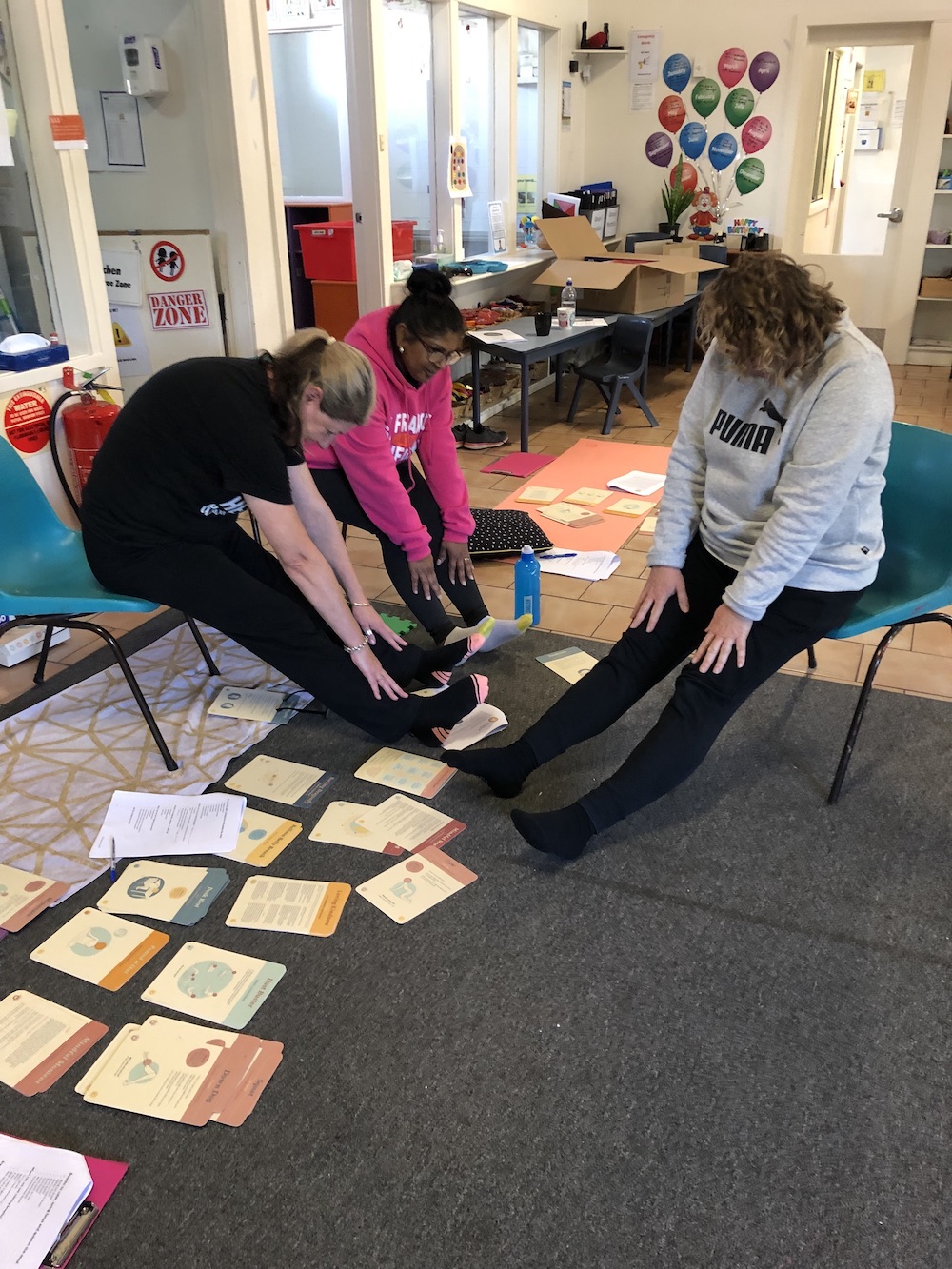
There are plenty of simple, evidence-based tools that educators can learn to better manage their daily wellbeing across the three domains of mental, emotional and physical health.
Beth says many of the interventions are small, and success depends on education and understanding, and the level of support given to staff to enable them to be consistent in their application.
“That’s why we’ve created a dedicated wellbeing workshop for teachers. It’s a way for management to give back to their educators and show their support. Staff can be encouraged to cultivate small rituals like waking up and enjoying five deep belly breaths and whispering three things they’re grateful for before reaching for the phone. This sets up the day within a space of ‘calm abundance’ rather than the ‘I’m not good enough’ space that often comes from Instagram scrolling.”
Belly breaths are slow deep inhalations through the nose, which cause both the chest and the large muscle in the belly, known as the diaphragm, to expand. When people are in a state of stress, they tend to engage in shallow breathing ready for ‘fight’ or ‘flight’.
Taking a few deep slow deep breaths is a very effective way to reduce the heart rate and cause the body to relax, and Beth suggests they be used regularly throughout the day.
“Belly breathing can be used any time teachers are feeling stressed and the children love doing it too,” says Beth.
Ending the day feeling calm is as important as starting the day calm and Beth suggests that educators try and find a few moments of quiet after a jam-packed day at work, to release any tension and reset.
“Instead of going home to slump in front of the TV with a beer and potato chips, take a 10 or 20-minute mindful walk along the beach or in the park, in silence and without your phone.”
The science of stress
Understanding the science of stress and how it impacts the body is one of the key factors in learning how to manage our stress response and create calm according to Beth.
“Educators also need to understand the huge benefits to making some lifestyle changes - to things like their nutrition and exercise. These are not insurmountable, and the key is to make little bite size changes that are achievable and can be maintained.”
The Karma Class offers a range of professional development workshops designed to teach educators how to easily weave well-being practices, such as mindful movement, mindfulness and breathwork, into every day, so that teachers and children thrive equally.
Educators can also benefit from making changes to:
- Nutrition: reducing sugar and processed food will improve energy levels
- Exercise: gentle exercise, like yoga, is great for mental health and physical wellbeing
- Lifestyle: spending time in nature is an elixir for the soul, as are mindful moments or meditation
- Self-care: setting aside time for pampering and activities that improve wellbeing

It’s true, many of these changes are straightforward and can be made by people on an individual basis, but Beth says that when educators are offered organisational support and tools to better manage their wellbeing, the benefits are more widespread.
“When we feel healthy in both our body and mind, we bring our best selves to whatever it is we’re doing. We become enthusiastic participants in our life. So, our work becomes a place where we want to be each day.
“Everybody has challenging days, but when there is support, and teachers have been given tools to manage their own ups and downs, as well as those tricky behaviours and situations in the classroom, then everyone thrives – there’s an inner and outer scaffolding.”
All in all, improving educator wellbeing is in everyone’s interests and as Beth says:
“At the end of the day, you can’t have a school without teachers … and you can’t have an amazing school without amazing teachers!”
Learn more about Beth’s professional development course for teachers here.