


Learning with Mirrors
Five mirror play activities that are amazing for babies and toddlers.
BY HEJIRA CONVERY, KINDICARE
Self-aware teens and style-conscious adults love a mirror, but they’re not the only ones who enjoy gazing into a reflective surface!
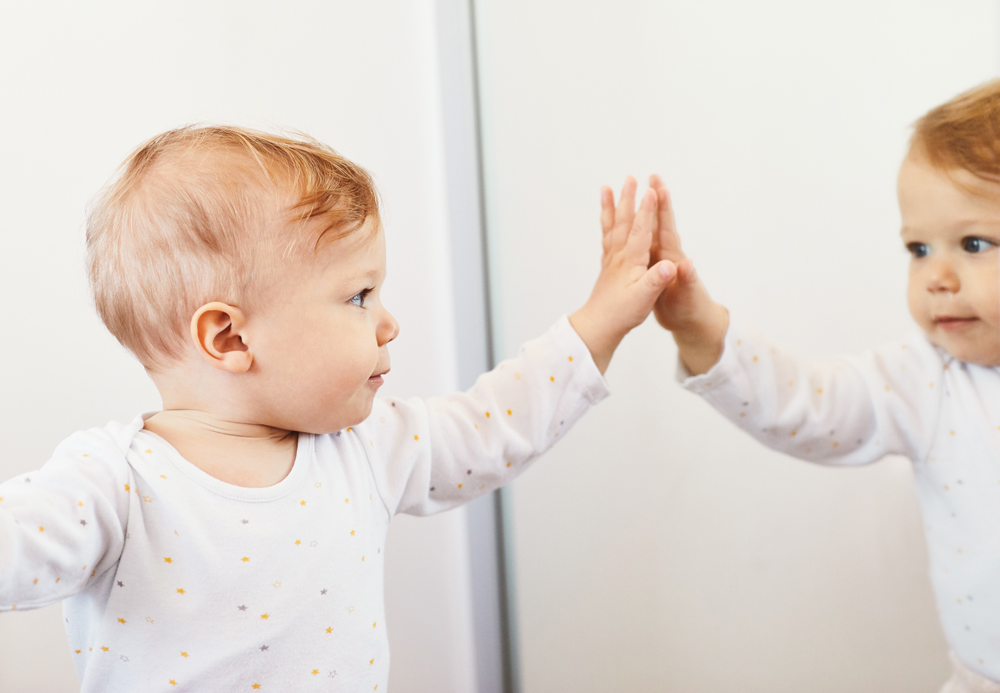
Mirrors are also really engaging for babies and toddlers, and if you’ve got a little one, you’ll be interested to read this illuminating article from Bright Horizons.
It talks about the different ways that mirror play enhances skill development during babyhood and toddlerhood – from fostering self-recognition and object permanence, to encouraging motor skills and spatial awareness.
Mirror play is great for language development, too, when a grown-up comments on what they see before them.
And peering into a mirror also helps to strengthen a baby’s ability to observe and focus, while sparking that beautiful thing called ‘curiosity’.
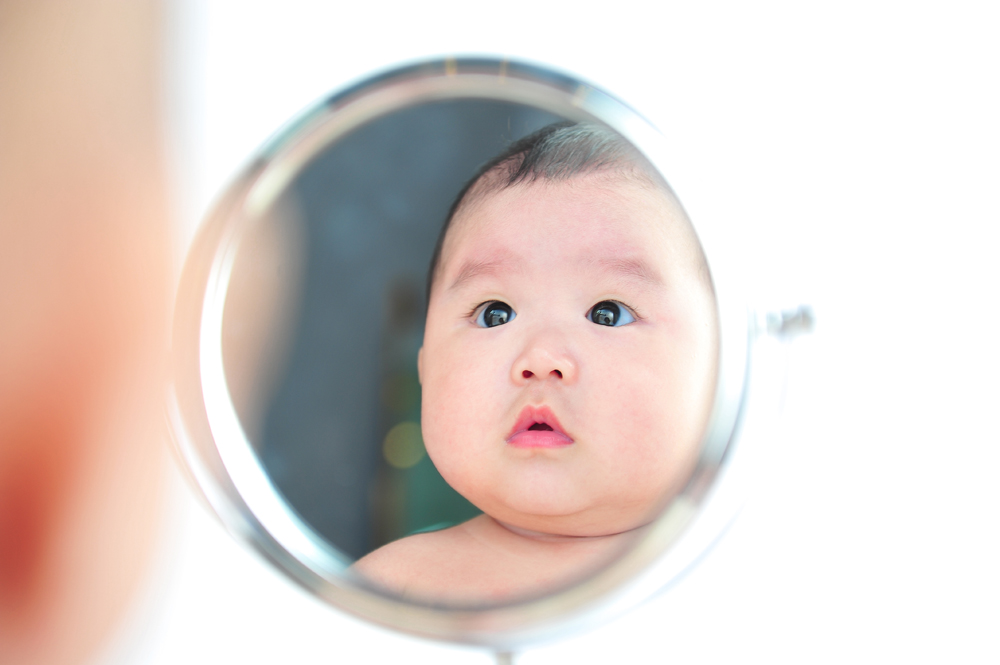
All in all, there are lots of reasons to reach for a mirror when your child is little.
You do need to make sure any mirror you offer is baby-safe and shatter-proof, and that your little one’s mirror play is carefully supervised.
However, once you’ve got that sorted, here are five great ways to get started with mirror play.
1. Use a mirror for tummy time
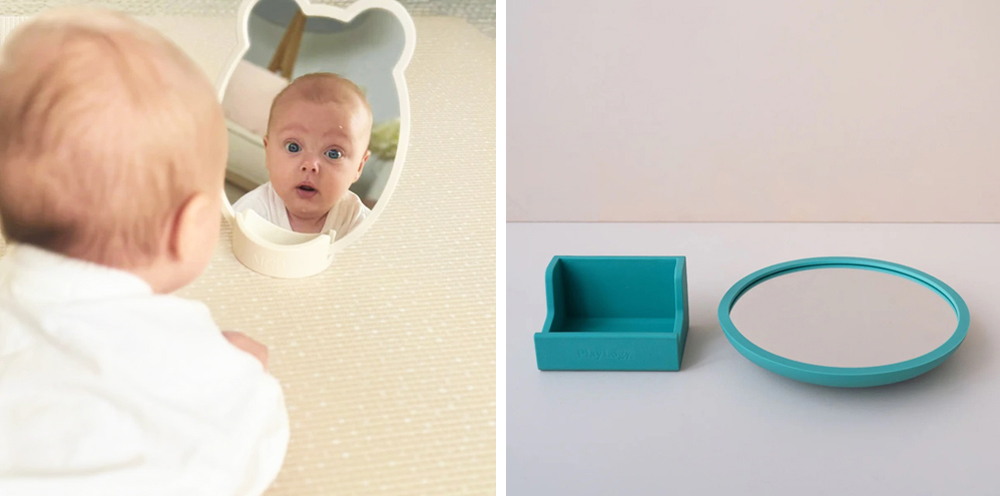
There are some lovely-looking tummy time mirrors on the market, like those from Munchkin & Bear and PlayLogy, and looking into one helps to strengthen your baby’s neck and torso, while distracting them from the hard work their body’s doing!
You can also use a tummy time mirror to develop literacy through play (for example by saying, “Look! I can see Emily smiling at me”).
2. Play Peekaboo with a scarf over a mirror
Scarves are such a great sensory play material for babies, as you’ll see in this KindiCare article about My Playhouse Darling Park.
And when you use a scarf to cover, then uncover, a mirror, this helps your little one to understand that the mirror, and their own giggly face, still exist even when they can no longer be seen.

3. Hold your little one and look into a mirror together
This is a great way to bond, and Bright Horizons explains that when you point out different facial features and expressions in the reflection, you build your little one’s social-emotional development and emotional literacy.
So, for example, you might say, “Here is your nose. Here is Mummy’s nose.”
Or, “I’m smiling. I’m happy.”
You can also develop your baby’s early literacy and numeracy by pointing out other body parts, like shoulders, knees and toes, and adding numbers to the conversation.
For example, by saying, “You have five fingers. 1, 2, 3, 4, 5.”

4. Search out some different kinds of reflective surfaces
Mirrors create a super crisp image, but your little one will also learn a lot by looking at other reflective surfaces, like windows, metal saucepans and CDs (if you can find any!).
You can also use a mirror to reflect spaces outside, like puffy clouds in the sky or a fluttery canopy of leaves, which expands your child’s view of the world and their vocabulary.

5. Share a toy or book with a built-in mirror
Good product designers know that mirrors help to support littlies’ sense of identity, self-awareness and social-emotional development, so there are lots of toys and books with reflective features.
The Black & White Spinning Book from Taf Toys is one great example, with the added benefit of high contrast images for your young baby, and your little one will also love the look of Hinkler’s First Steps: Hello Baby! Mirror Book.
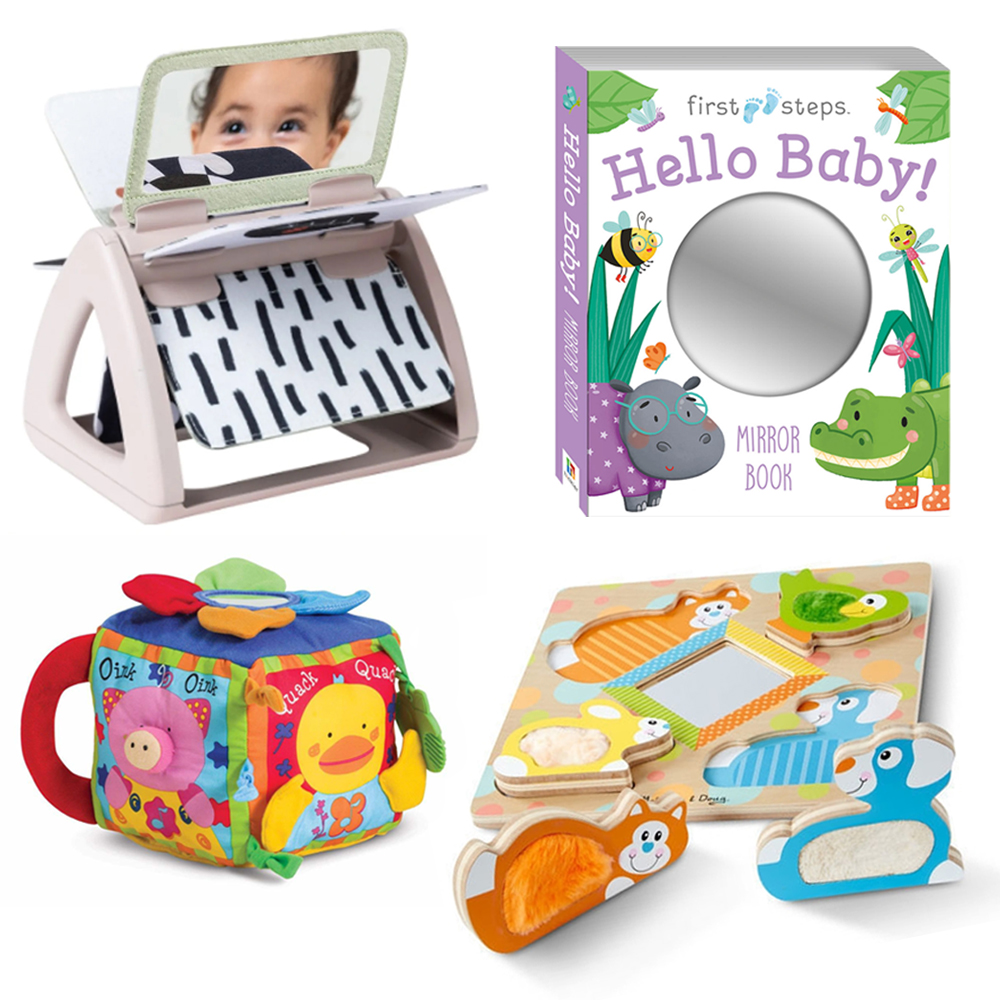
Melissa & Doug’s Musical Farmyard Cube and First Play – Touch & Feel Puzzle: Pets are fun too, with animals in the mix.
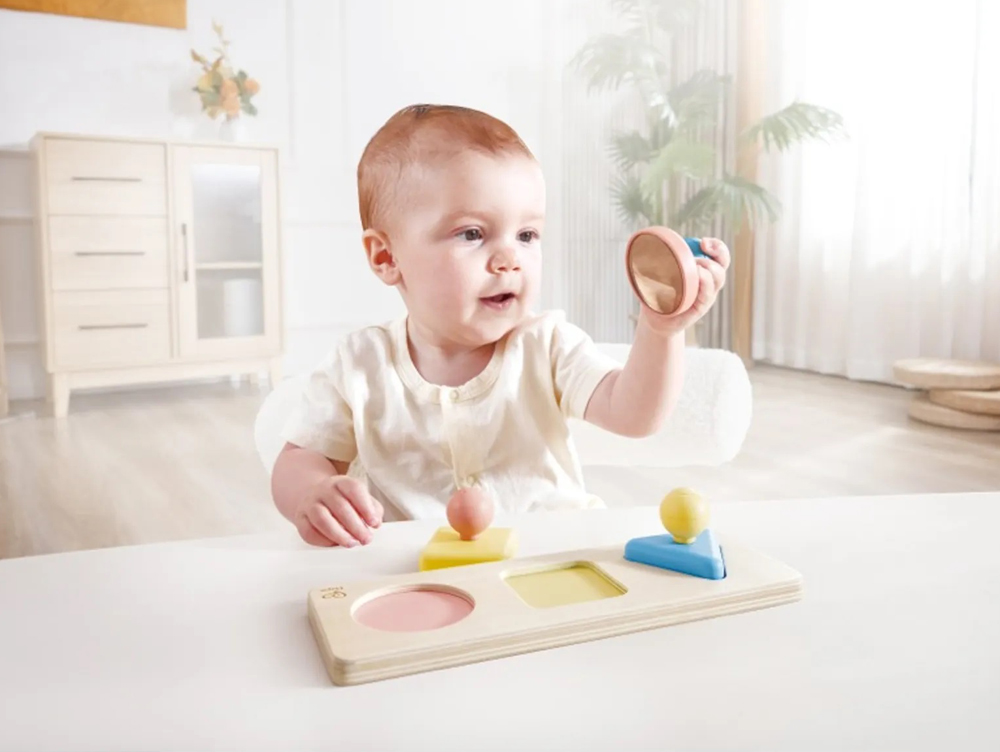
And this Hape Montessori Mirror Shape Puzzle is amazing for your older baby’s hand-eye coordination and fine motor skills, as well as their colour, shape and ‘that’s me!’ recognition.
There’s definitely lots to explore with mirrors, and quality early learning services know how important sensory play is for little learners.
This article provides some great examples, and if you’re looking for childcare now, or later, KindiCare is here to help!
The free KindiCare App and Childcare Comparison Website make it easy to reflect on your different options, and book tours at your favourite centres, so your family can find the perfect childcare match.