

Safe Car Travel for Kids
See why it’s wise to keep your child in a harnessed car seat till the age of eight + Learn what to look for when choosing a car seat
BY HEJIRA CONVERY, KINDICARE
Life moves fast when you’re raising a family, but there’s definitely no rush when it comes to car travel.
It’s really important to drive within the speed limit to keep everyone safe, and there’s also no urgency to move your child out of their car seat.
There’s actually a very strong case for keeping your child harnessed in until the age of eight, instead of shifting them to a booster seat or adult seatbelt any earlier, and to see why this is a sensible – and safe – approach, we’ve spoken with the experts at InfaSecure.
InfaSecure has been keeping young passengers safe for generations, and as a family-owned brand, they understand that us parents are looking for practicality and peace of mind when strapping our children in.
So, what is the safest way to restrain your child when on the road?
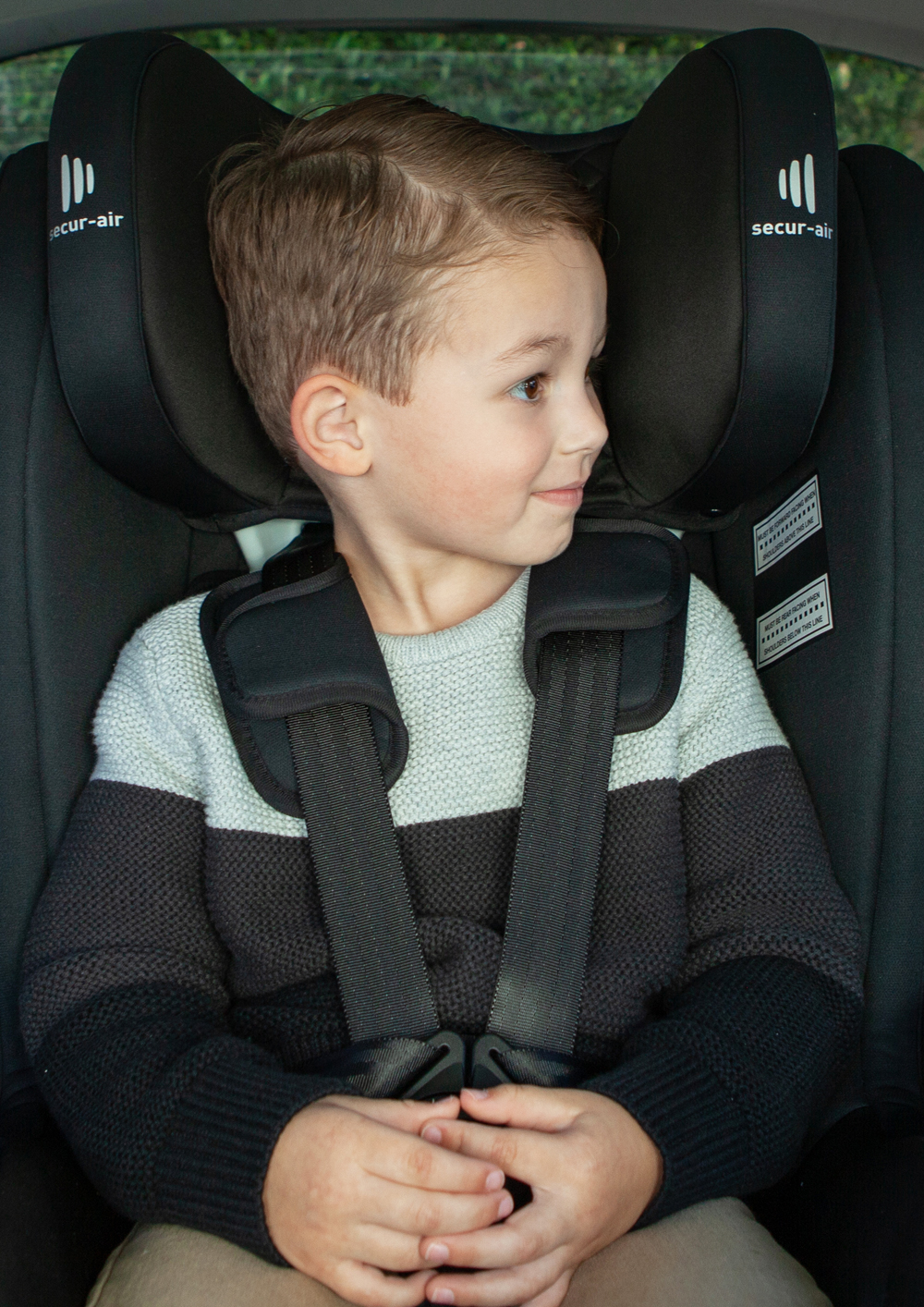
Well, InfaSecure explains that in the event of a crash, it’s best practice safety for your child to be fully harnessed in their car seat.
A proper six-point harness offers much better protection than a booster seat with seat belt, because it significantly reduces the forward excursion (aka the forward movement of the head, shoulders and chest in a crash).
A six-point harness also keeps your child in a better position for side impact protection, reducing the risk of impact from a car door or window in the unhappy event that your car crashes (or is crashed into) on an angle.
InfaSecure explains that the harness system also helps to reduce the impact of a crash by spreading crash forces through several different parts (i.e. the top tether, seatbelt, harness and shell), and it distributes this reduced force over a larger contact area.
A harness also minimises the risk of your child sliding out of their restraint (aka submarining), which can happen in booster seats, if they’re not properly fitted.
If you’ve already invested in a booster seat and it’s correctly installed, then you’ll be happy to hear that booster seats are safer than using a seatbelt alone.
However, given the choice, InfaSecure says a harnessed car seat provides much greater protection in a crash.
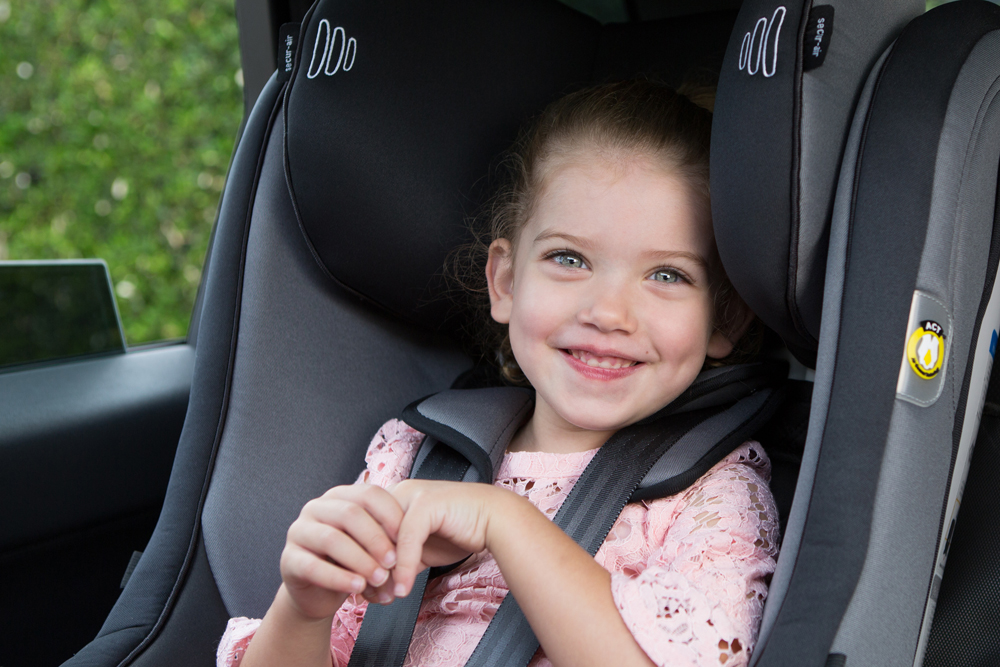
Buying one car seat for ages zero to eight also makes financial sense, because you don’t have to purchase that booster seat around the time your child goes to school.
However, instead of buying the first car seat you see, InfaSecure suggests that you check the size of your car against the car seat model you like the look of.
Car seats for ages zero to eight do take up more space when they’re in the rearward-facing mode, so if you’ve got a couple of kids or a regular-sized vehicle, it’s important to measure up your prospective car seat before hitting that ‘Buy now’ button!
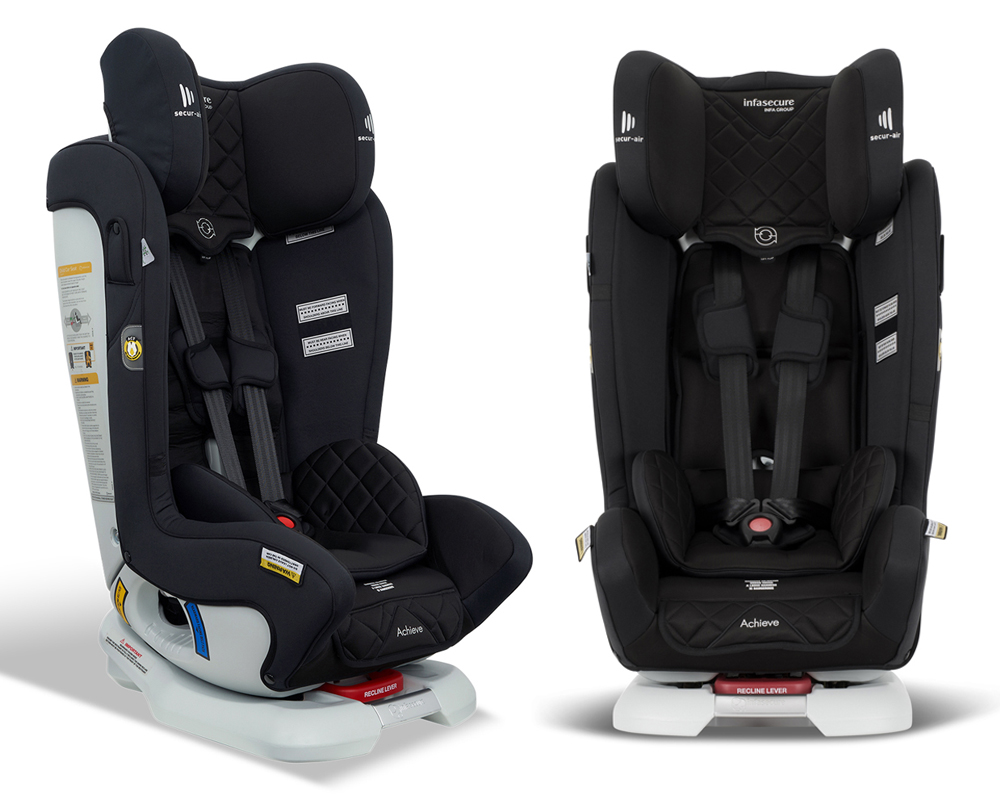
The InfaSecure Achieve More is one great option, because it fits lots of different vehicle types, from large 4WDs, vans and people movers, to medium sedans, wagons and SUVS.
InfaSecure says you might also like to look at their Grandeur Go, Assure Black, Emperor Eclipse or Optima GT Sport models, which are all for ages zero to eight, and come with that safe six-point harness.

And, of course, size isn’t your only consideration when choosing a car seat for your baby, toddler and bigger kid.
Things like cost, comfort and convenience also matter, and because you’re buying a car seat your child will grow into, InfaSecure suggests that you look for the following features:
- An adjustable crotch buckle, to avoid sensitive areas being squished
- Side impact protection for your child’s head area, in case an angle crash does happen
- An easy, one-handed headrest and harness adjustment, so you don’t have to re-thread the straps or do a full re-install of the seat
- A self-adjustable tether strap, which you can easily reposition to either side of your child’s car seat shell and keep safely taut
- Machine-washable covers, because food, drink and nappy accidents are pretty much unavoidable, and
- Removable inserts, because these don’t actually make the car seat any safer and, in time, your growing child will want a bit less padding around them.

Once you’ve chosen your car seat, it’s then really important to install it correctly and always make sure your child is properly strapped in.
There are plenty of professional car seat fitters who don’t charge too much and will ensure the seat is secure in your car.
However, because you’ll have the car seat for so long, and will have to adjust it and move it at different times, InfaSecure encourages you to install the car seat yourself, so you know what you’re doing.
If you are unsure about your install, you can always get it checked by a local fitter before taking your child on the road, and this expert will be able to tell you what you’re doing right or wrong.
InfaSecure also recommends that you always strap your child into their car seat (even when they’re a pretty competent seven-year-old) to make sure the fit is right.
You should do the ‘pinch test’ to ensure the harness is tight enough, and InfaSecure says it’s also important to check that:
- The crotch buckle placement lines up with the top of your child’s thighs
- Their head is cushioned by the headrest, and
- Their shoulders aren’t touching the headrest.
Chunky clothing, like a puffer jacket, can also mess with a correct harness fit, so if it’s cold in the car, it’s better to pump up the heat, than squash thick clothing into the straps.
Of course, there will come a time when your child can safely move into an adult car seat, and although harnessing is recommended till the age of eight, this figure is a good guide, rather than an immoveable number.
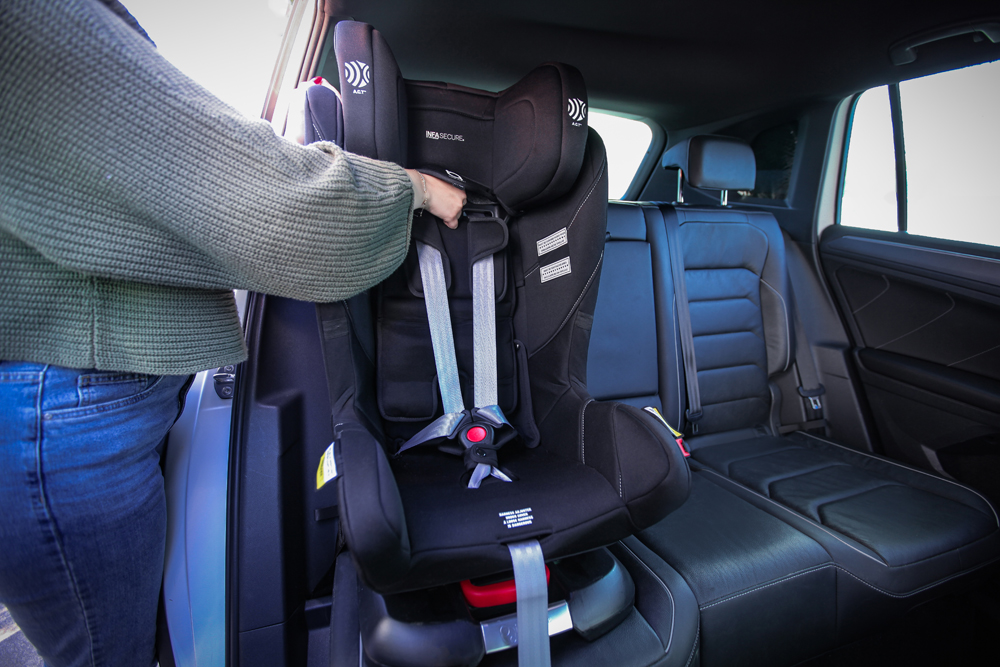
InfaSecure explains that every Australian child restraint has a shoulder height marker sewn into the cover, and this will tell you when your child is ready to come out of their seat.
When your child’s shoulders have reached the final shoulder height marker, it’s safe for them to move into an adult seatbelt, and if your child is on the shorter side, they’re likely be in their car seat for longer.
This might not be a popular move if all their eight-year-year friends are happily clicking themselves into adult seatbelts, but safety really does have to come first, and you’ll be grateful for that six-point harness in the event of a minor bump or major incident.
Take it easy, everyone, and here's to many happy and safe trips as a family.