

Screen Time Done Right!
4 ways to make screen time positive for your preschooler.
BY HEJIRA CONVERY, KINDICARE
Whether you’re juggling work-from-home, trying to get chores done, or just really need some downtime, putting your preschooler in front of a screen is a quick-fix.
They’ll quietly slip under the spell of whatever’s playing, leaving you free to focus on that other task, however, it is important not to overdo the digital babysitter!
The government recommends no screen time in the first two years of your child’s life, then no more than one hour per day between the age of two and five.
They say any screen time your little one gets should be educational, and this means that instead of plonking your preschooler in front of a screen and leaving them to it, you should:
- Choose the content carefully
- Watch it with your child
- Talk about the content, and
- Use it to help your child understand the world around them.
This advice is mirrored in an interesting article just published on The Conversation.
It contains tips to help you plug into the positives of screen time, and thanks to the authors, Erika Squires and Lucy McGoron, here are four ways to make screen time better for your little learner:
1. Choose high-quality content
You’re looking for content that has educational benefit, and Erika and Lucy say it’s important to choose content that’s specially designed for young children (aka age-appropriate).
Common Sense Media can help with this, and ABC Kids has lots of preschooler-friendly shows that are awesomely ad-free.
Erika and Lucy explain that choosing high-quality content also means looking for shows that, “Use evidence-based educational techniques, such as participatory cues.”
This sounds high-level, but it just means that characters talk directly to your child to encourage them to think, act or respond, instead of just passively watching the show.
Research suggests that children learn new words better when a show has participatory cues, and Ms Rachel, Play School and Dora the Explorer are three examples of content that include plenty of participatory cues.

2. Join in with your child’s screen time
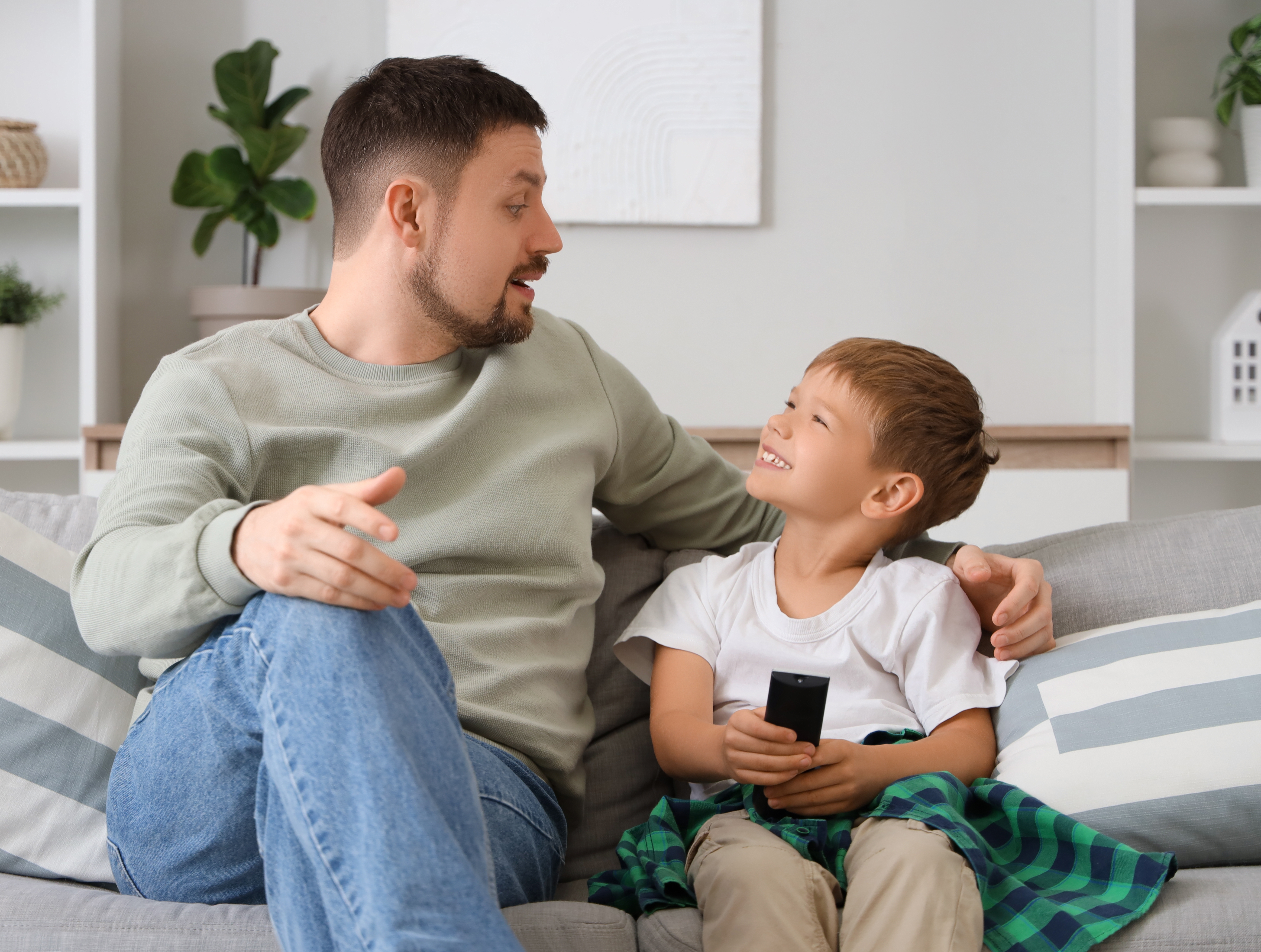
This means watching the content together whenever you can, and talking about it with your preschooler.
This provides a great chance to snuggle, smile and giggle together, and discussing content with your little one can be really positive for their language development.
To get the parent-child conversation going, Erika and Lucy say it can help to:
- Press pause and ask questions during a show
- Point out simple concepts, like letters and colours, or
- Use a ‘think aloud’ approach to get your preschooler’s mind whirring, for example by saying, “That was funny! I wonder what Bandit will do next?”
3. Make a link between what’s on screen and real life
Research shows that children learn more from screen content when it connects to their real-life experiences.
So, you can promote your child’s language development and cognitive skills (including attention and memory) by linking what your preschooler is watching with experiences they’ve had.
For example, you might say, “They’re looking at flowers. Do you remember which flowers we saw in Granny’s garden?”
4. Enjoy plenty of screen-free time
If you follow the Australian government’s recommendation of no more than one hour of screen time per day for your preschooler, then that leaves lots of time for other activities – even with pesky things, like work and chores, in the mix.
It’s a good idea to let your child take the lead when it comes to play, and whether they’re keen to read some picture books, make play dough cookies or re-enact a Bluey episode with their toys, there are loads of ways for your preschooler to learn through play, without a screen.
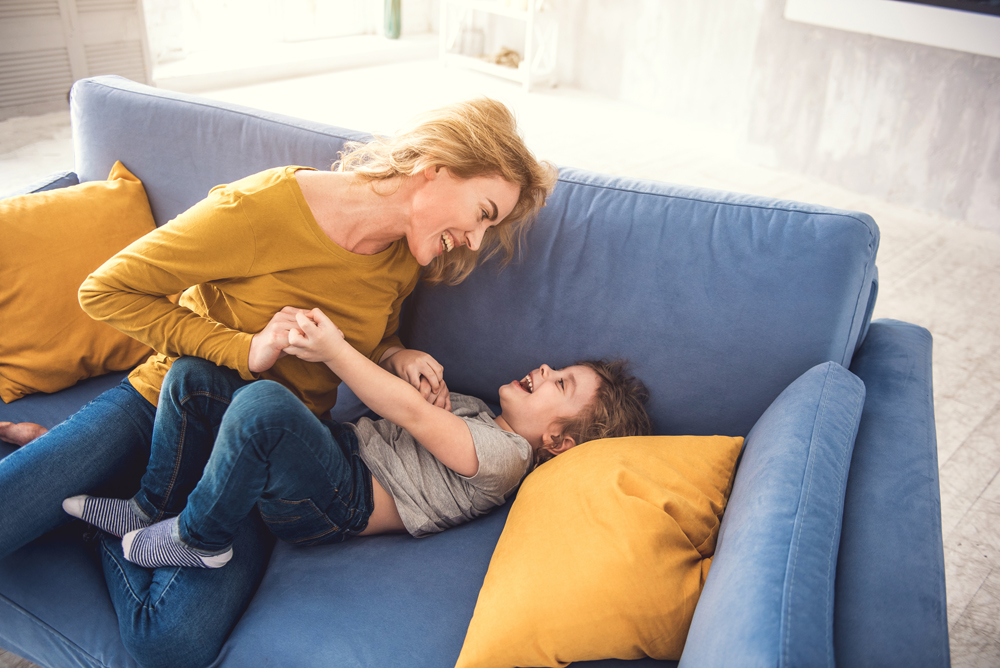
Also, although life can get crazy busy, Erika and Lucy remind us that one-on-one, screen-free, parent-child play is really important, and even just 10 minutes of this kind of play is beneficial for your young child.
And, of course, role-modelling matters.
Make sure you give your child your full attention when you’re playing along with them, which means no multi-tasking with your mobile or tablet!
All in all, quantity, quality and communication matters when it comes to screen time, and some content can be really positive for your preschooler.
The right kind is educational and entertaining, with the power to bring the two (or five) of you together, and we hope there's happy viewing ahead!