

Sensory Learning for Babies
My Playhouse Darling Park is a brand-new childcare centre that will engage your baby’s senses in all the ways!
BY HEJIRA CONVERY, KINDICARE
Most people can easily name the five senses - sight, hearing, taste, touch and smell – but there are actually three more senses you may not be so aware of.
The proprioceptive, vestibular and interoceptive senses are harder to say, but equally important, and if your baby is going to childcare, then you’ll want to enrol them in a place that engages all eight senses in a fun and thoughtful way.

This will support your little one’s healthy development, and to give you a feel for a great sensory approach, we’ve spoken with Nicole Halton.
Together with Tash Treveton, Nicole is co-founder of Inspired EC, the Operational Management team behind My Playhouse.
Nicole understands that, “At a childcare centre, sensory learning is partly about the program, partly about the environment, and partly about the educators,” and with her team, she’s created a sensory wonderland in downtown Sydney!

Inspire EC’s brand-new centre, My Playhouse Darling Park, cares for all ages from birth to five years, but it’s in the Poppy Wing that babies get a great introduction to sensory learning.
The team has made a conscious decision to go back to basics with their sensory approach, and whether you’re looking for childcare in Sydney’s CBD or further afield, you’ll be interested to see how they engage babies’ senses without flashy resources or full-on experiences.
Here is the centre’s special take on each, and every, sense!
1. Taste
Little people learn a lot by putting things in their mouth, and at My Playhouse Darling Park, the educators offer babies a variety of items that they can safely taste.
Nicole explains that, “It’s developmentally appropriate for babies to put things in their mouth, and this feels good for them, so we offer things that can be enjoyed with supervision, then washed well.
“Scarves are great for this, because babies can put them up to their face, put them in their mouth, and suck on them, and our educators know when they’ve had long enough with their soggy scarf.”

2. Touch
Touch is another really important sense for babies.
They want to touch and pick up everything, so the team offers lots of different surfaces, materials and fabrics for little ones to get their hands on.
Nicole explains that, “With infants spending so much time on the floor, accessibility is important, so we ensure that things are low, so babies can get to what they need.
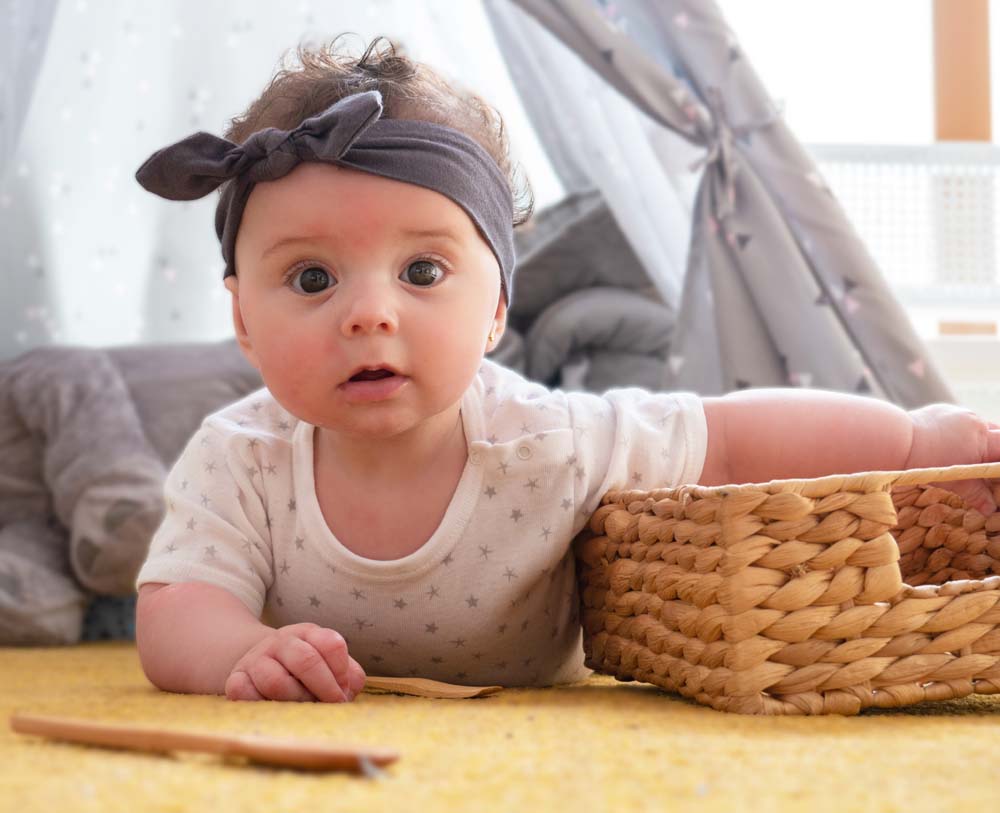
“We store a lot of things in baskets, and Treasure Baskets are one of the key ways we engage babies’ touch sense.
“To make a Treasure Basket, we put a load of random stuff in a basket, and babies can come to the items and choose what they want to explore and experiment with.
“We include things that feel different. So, we might put a soft sponge, smooth ball, silky scarf and rough pine cone into the Treasure Basket, and seeking out this tactile input helps babies to understand the difference between things.”
3. Hearing
Big sounds can be overwhelming for some babies, so the team explores sounds mindfully to ensure that babies can hear the smaller sounds around them, and learn the difference between sounds.
The centre has a lovely outdoor area where babies can listen to bird sounds amongst the city hum; and they’re always free to make their own sounds. For example, by banging pot lids together.
The educators also understand that sometimes they need to sit back and let babies learn quietly, while other times, babies are really receptive to talking and singing.
4. Sight
As with sound, the centre has a ‘less is more’ approach when engaging babies’ sense of sight.
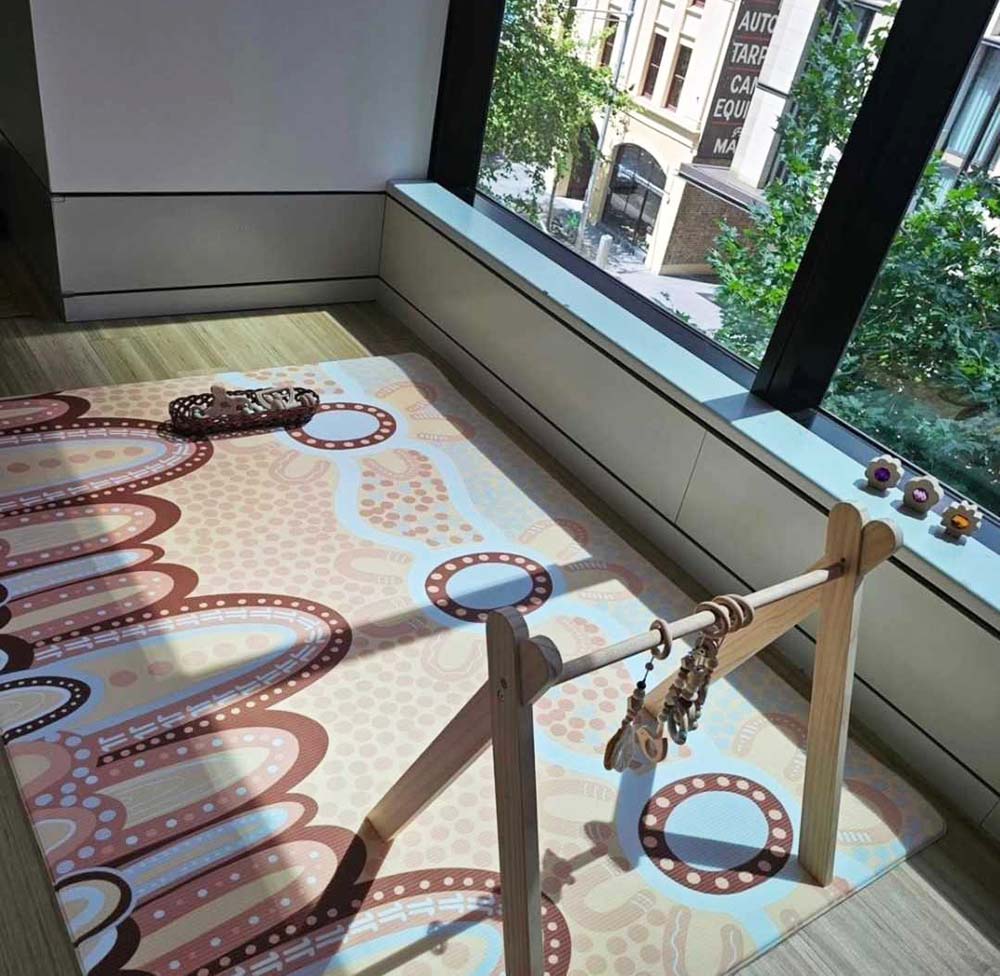
Nicole explains that, “We give the babies a lot of visual input, but not visual overload, and we keep the Poppy Wing as clutter-free as possible in terms of adult clutter.
“We ensure that the things we have in the space are beautiful visually, and leave it to the babies to make their own mess.”
Glass is also used to help babies feel visually engaged and connected.
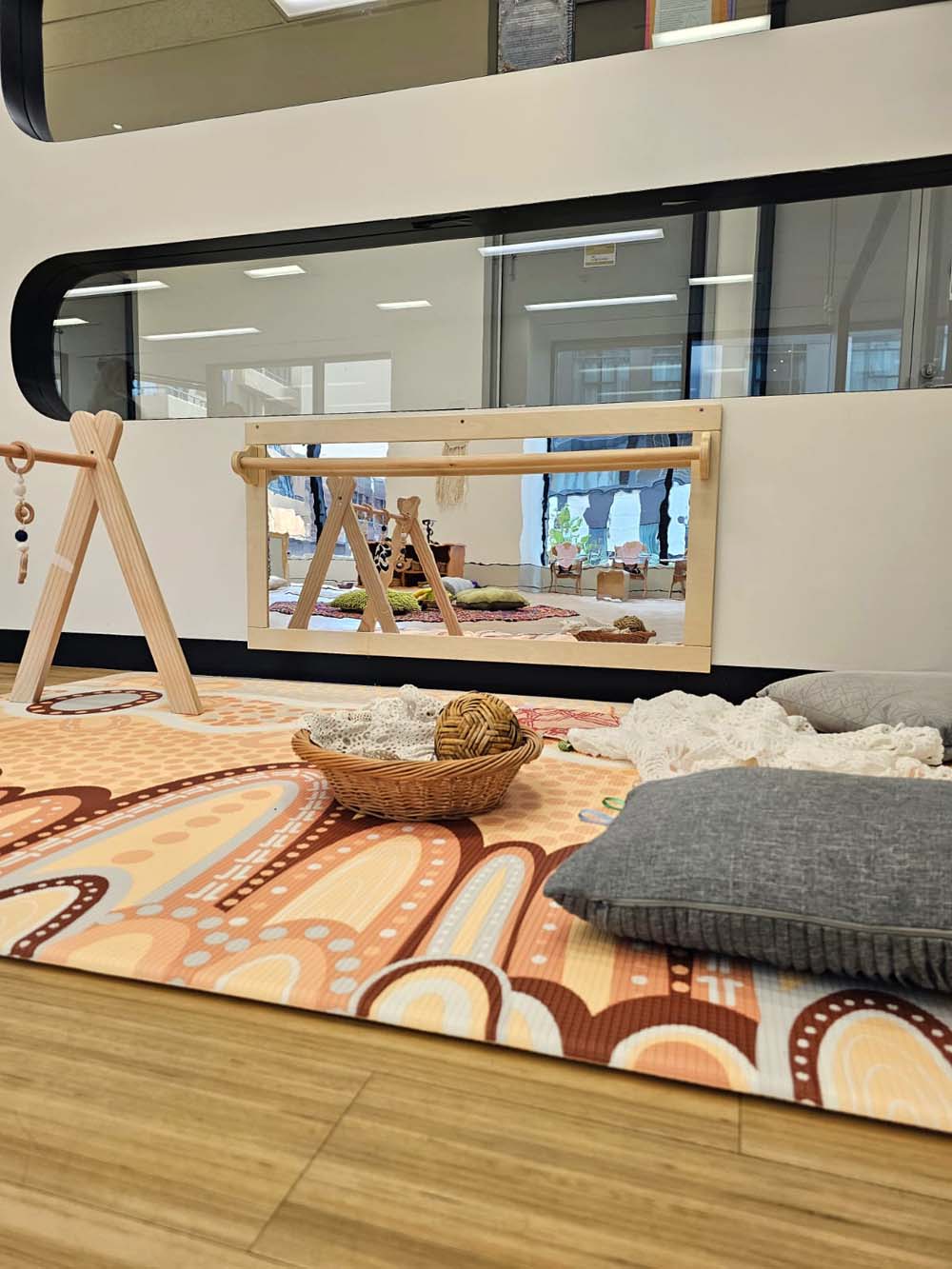
Nicole explains that, “We have a lot of mirrors, because we know that infants are fascinated by their own reflection, and there are big windows that allow babies to see out into the hallway and other rooms, and watch the leaves change colour outside.
“We also make intentional choices to engage the sense of sight, so for the Treasure Basket, we might include a scarf with a really interesting pattern on it, or put together items in different shades of the same colour.
“We also offer a lot of high-contrast black and white resources, because we know these are really helpful in the early months of a child’s life.”
5. Smell
Some childcare spaces don’t smell so good (like the nappy change area!), but olfactory learning is really important for babies, and the team shares lots of different smells with them.
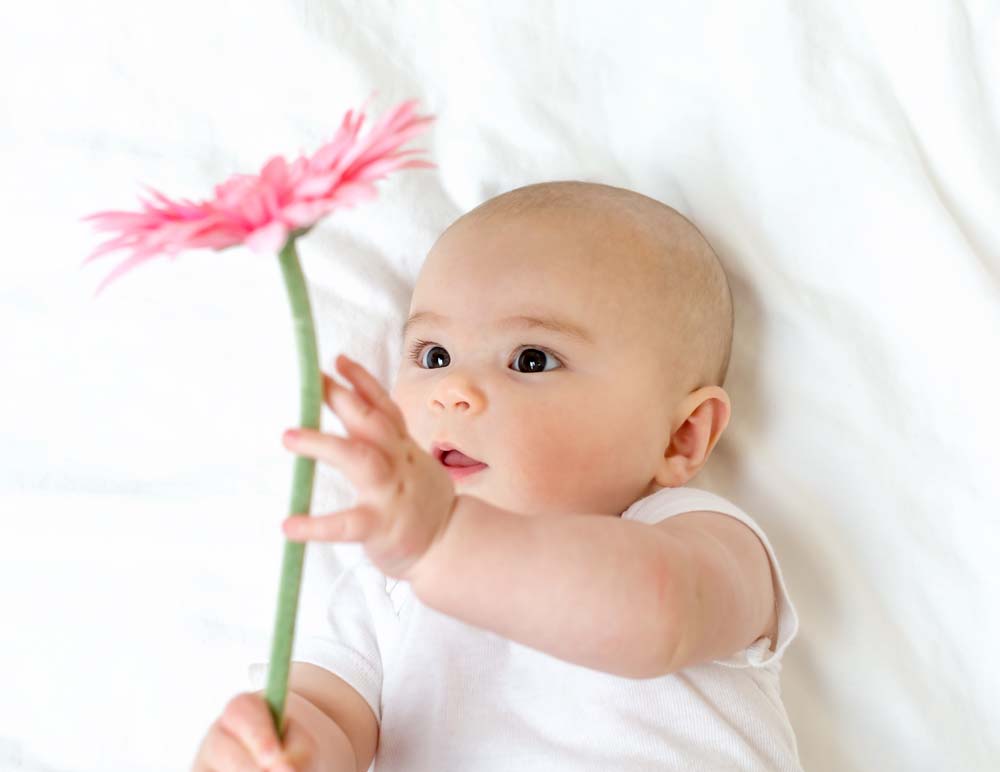
For example, Nicole says, “We use safe essential oils where we can, and simple experiences, like encountering flowers in a vase, the smell of meals being prepared, or going outside to sniff the rain, are all great for the babies’ olfactory learning.”
6. Vestibulation
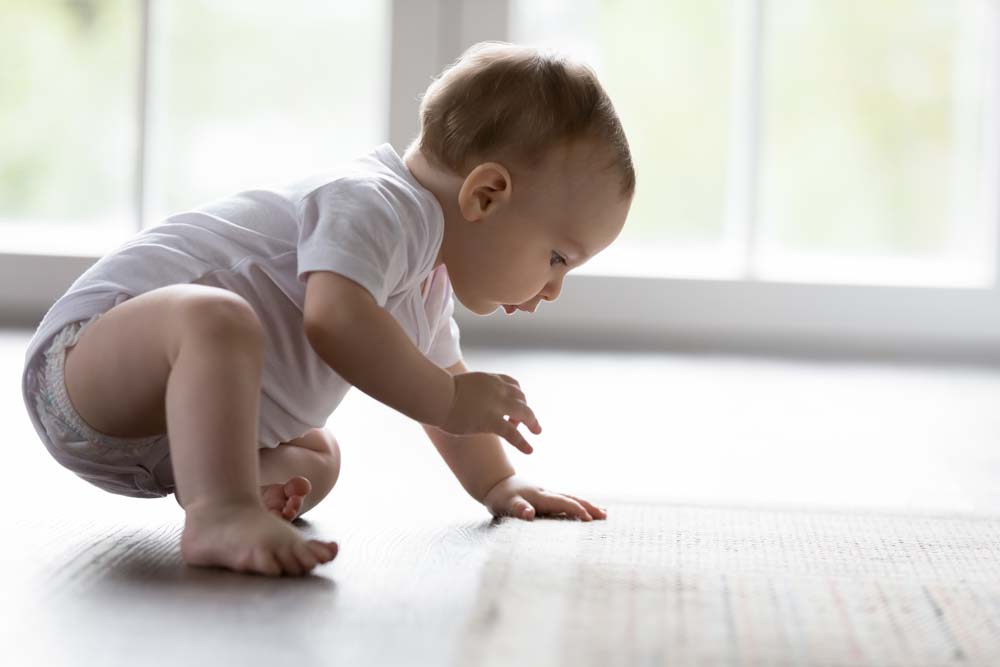
This sense is related to balance, which is particularly important when babies are learning to sit up and walk.
However, instead of holding a baby’s hand to help them balance, or giving them a super soft pillow to land on, the team lets babies find their balance when they’re ready, and take reasonable risks along the way.
Nicole says, “We encourage freedom of movement, so they can move their bodies in the way they need to move them, whether that’s by rolling, crawling, walking or climbing a Pikler frame.
“We’ve also made a conscious decision to have firm flooring and mats, rather than soft padding, so babies have the solid input they need to balance well.”
7. Proprioception
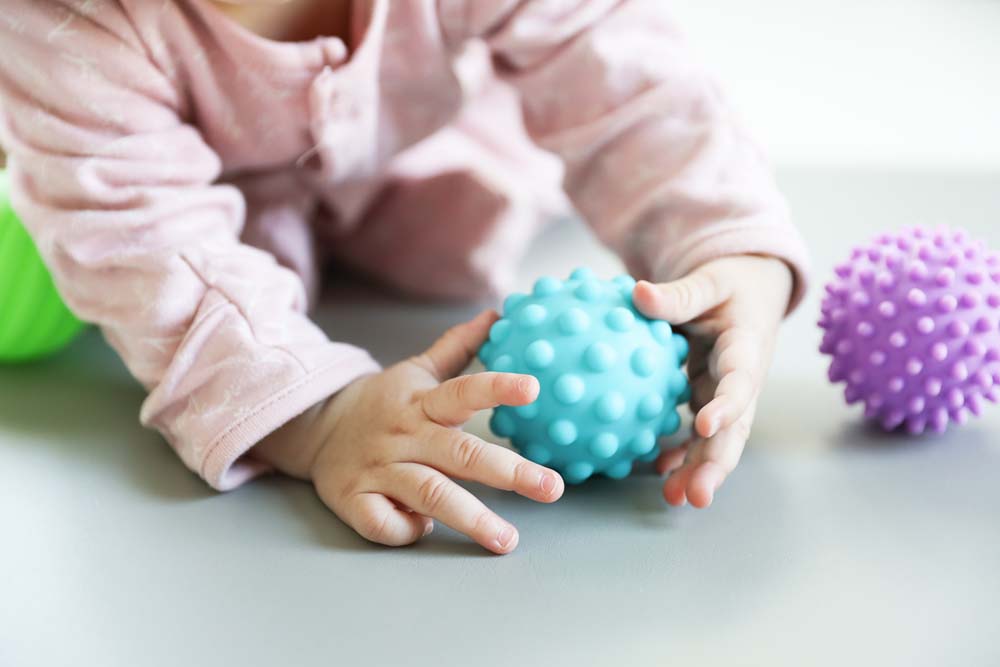
This sense is about the regulation of force, and although it takes children time to understand how hard different things should be held, gripped, squeezed or pulled, the educators use loose parts to help babies develop their proprioception sense.
Items that feel different and move in different ways allow babies to practise exerting different levels of force, and things they find in the Treasure Baskets are great for this.
8. Interoception
Instead of being an ‘outward facing’ sense, like sight or touch, this sense is about gut feeling and listening to one’s internal self.
Developing this sense means tuning in to feelings like hunger, tiredness and fear, and although little babies can’t independently act on these feelings, the educators at My Playhouse Darling Park think about what each baby needs in each moment.
Nicole explains that, “We are responsive to what they need, when they need it – whether that’s a feed, nappy change, cuddle or nap, and we support them to listen to their internal voice, so they can tell us what they need.”

All in all, the educators at My Playhouse Darling Park put a lot of thought and care into babies’ sensory experiences.
They know how crucial this is for each child’s healthy development, and if you’re looking for childcare in Sydney’s CBD, the team are very happy to take you through My Playhouse Darling Park.
You can book a tour by clicking the ‘Make Enquiry’ button in the centre’s KindiCare App or kindicare.com listing, and it’s not just the shoes-off policy in the Poppy Wing that will give you a great sense of this centre!
You’ll get a feel for the educators, program and environments when you tour the centre with your little one, and although we’re excited by the sensory experiences offered to babies, this service is amazing for toddlers and preschoolers as well.