

The Upsides of Tray Play
Tray Play is terrific for your toddler or preschooler, and Jellystone Designs is here to explain the why and how of this easy, enriching activity.
BY HEJIRA CONVERY, KINDICARE
The simple things in life are often the best, and Tray Play is definitely one of those things!
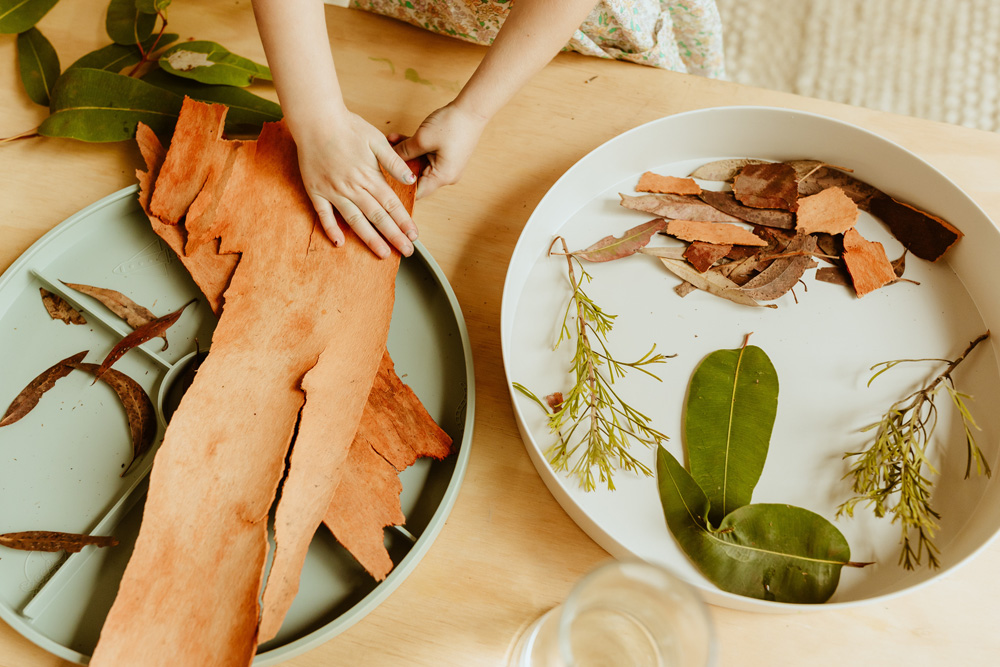
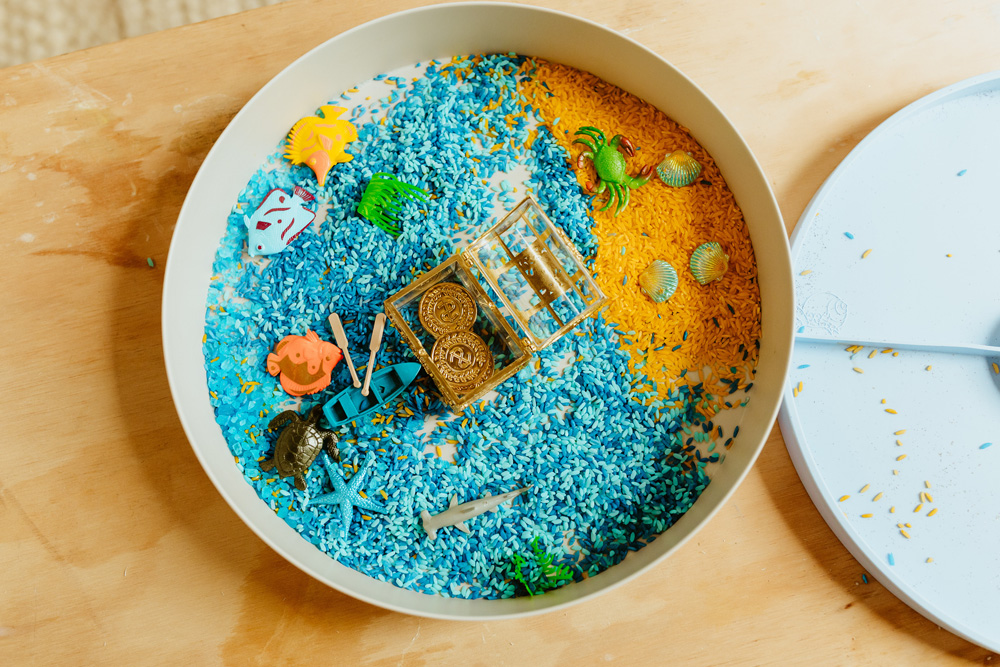
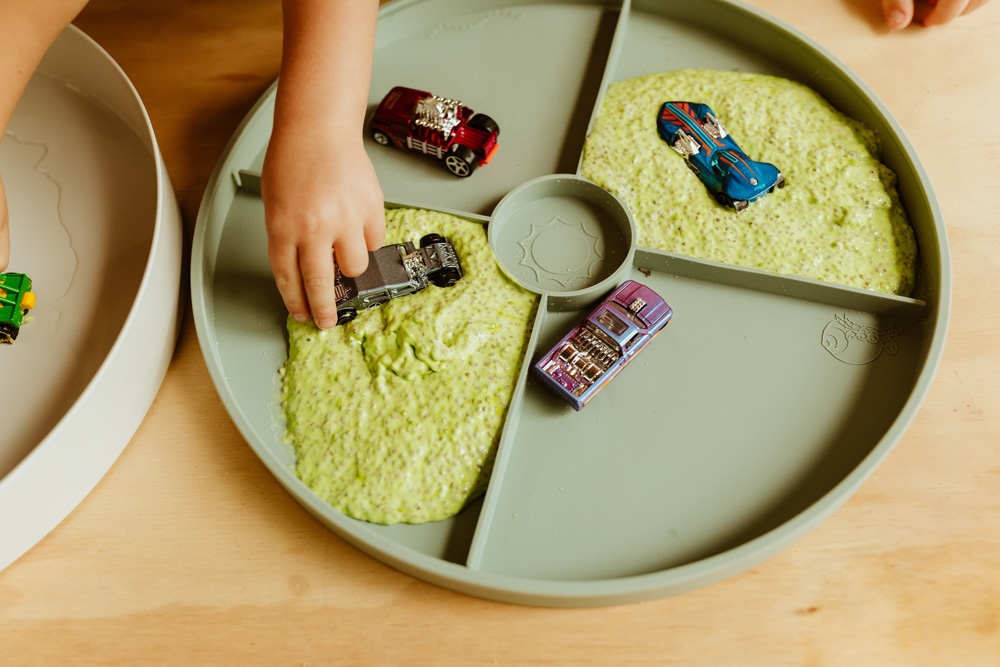
If you’re new to this kind of play, then the easiest way to describe Tray Play is to say that it’s open-ended sensory play contained in a defined space.
This means your child gets to explore different textures, materials, colours and movement – without this hands-on play taking over the house!
Everything stays in the tray, so whether your child is running their fingers through a zillion grains of rice, or three cans of shaving foam, their mess is contained.
This takes the stress out of a sensory play set up and clean up, especially when the tray is dishwasher-safe, with a snug lid.
As a parent, you’ll also love how Tray Play is a screen-free, take-anywhere activity that doesn’t cost the earth.
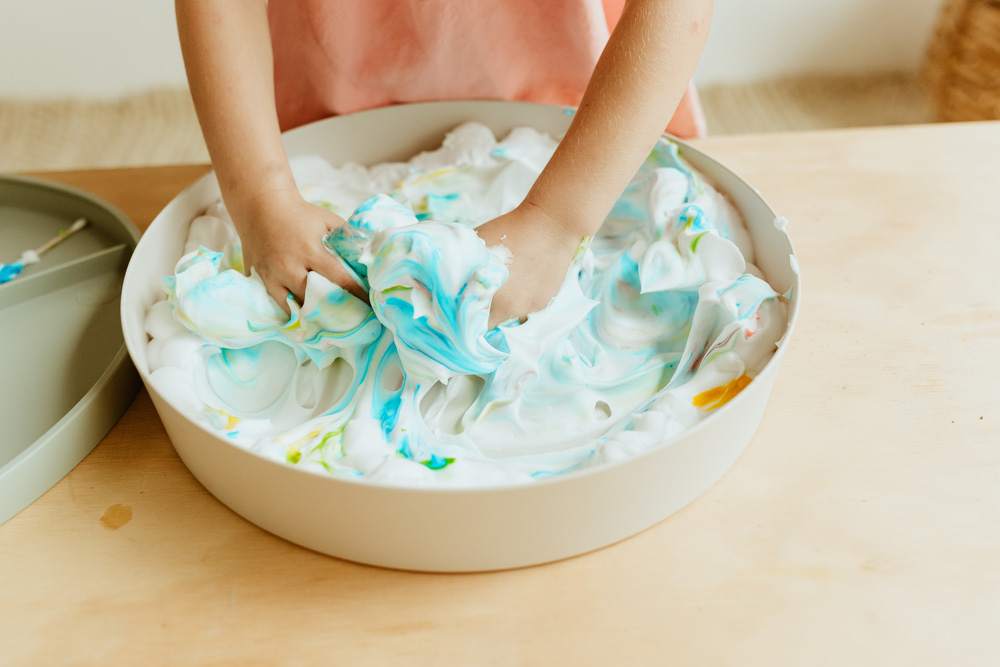
Most importantly, though, you’ll be happy to know that Tray Play is amazing for your young child’s development; and to learn more, we’ve gone to an expert!
Claire Behrmann is a mum-of-three and the brains behind Jellystone Designs.
Her sensory toys encourage calm, creativity and playfulness, and with loads of Tray Play in her range, Claire is perfectly placed to talk about this wonderful way to play!

So, why is Tray Play so great for young children?
Well, Claire explains that it supports lots of important developmental skills in early childhood, and some of the main benefits include:
Fine motor development
Scooping, pouring, grasping, transferring and picking up small objects helps to build the muscles and coordination that children need for learning and life.
Sensory processing
Young children learn through their senses, and Tray Play provides tactile, visual and sometimes auditory input, which helps their brains organise and make sense of the world.

Creativity and imagination
Tray Play is open-ended (with no rules or set results), so children get to take the lead. They invent stories, explore materials, and naturally follow their interests.
Emotional regulation
Slow, repetitive movements, like pouring, swirling or drawing shapes in sensory bases can be incredibly calming. This supports children to self-regulate and settle their nervous systems.
Focus and concentration
Having a defined space helps children stay engaged for longer with fewer distractions, keeping them busy and absorbed for ages.
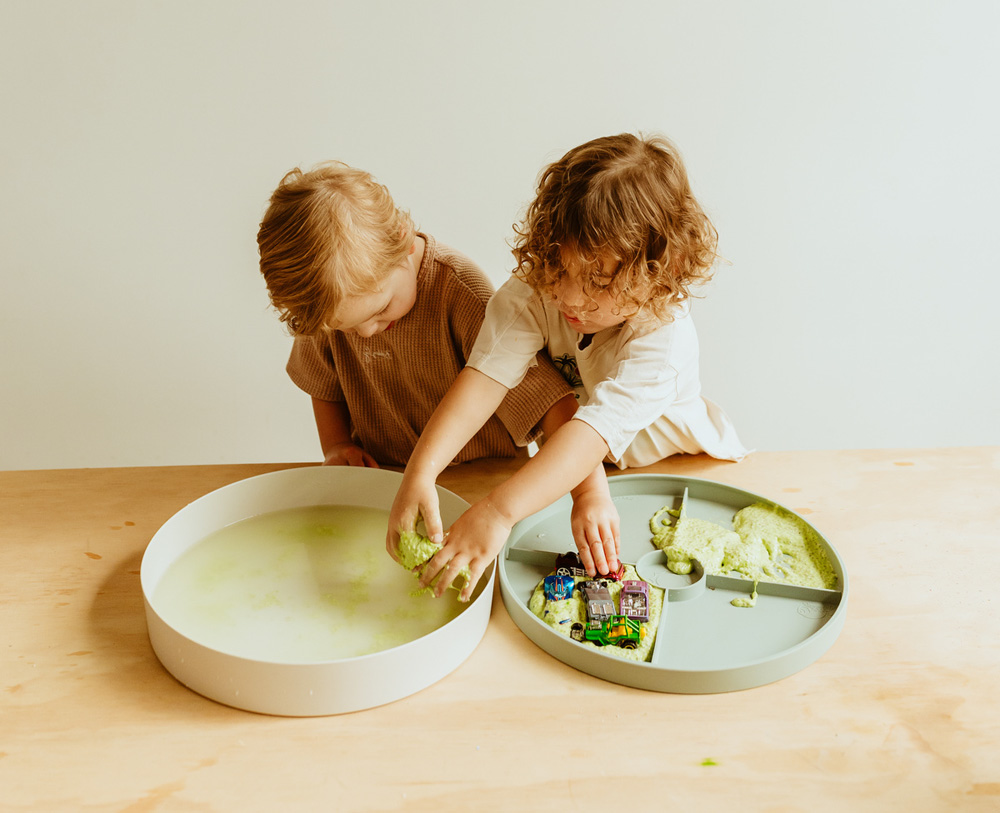
All in all, Claire says, “Tray Play is a beautiful way for little ones to follow their curiosity, experiment, make discoveries, and play entirely at their own pace.”
With a young family, you'll find that Tray Play really is a game-changer, and getting started is easy.
Once you’ve invested in a quality tray, you don’t have to buy anything special to fill it with.
You can just raid the pantry, craft box, recycling bin, toy basket or local park for interesting items.
However, some tried-and-tested ideas never go astray, and Claire has been kind enough to share these beauties for three different ages!
Tray Play idea for an 18-month-old: Citrus water sensory play
To set up this activity:
- Add a small amount of water to a Jellystone Designs Tray Play base.
- Slice oranges, lemons and/or limes and pop them into the water.
- If you like, add a small cup or spoon for scooping.
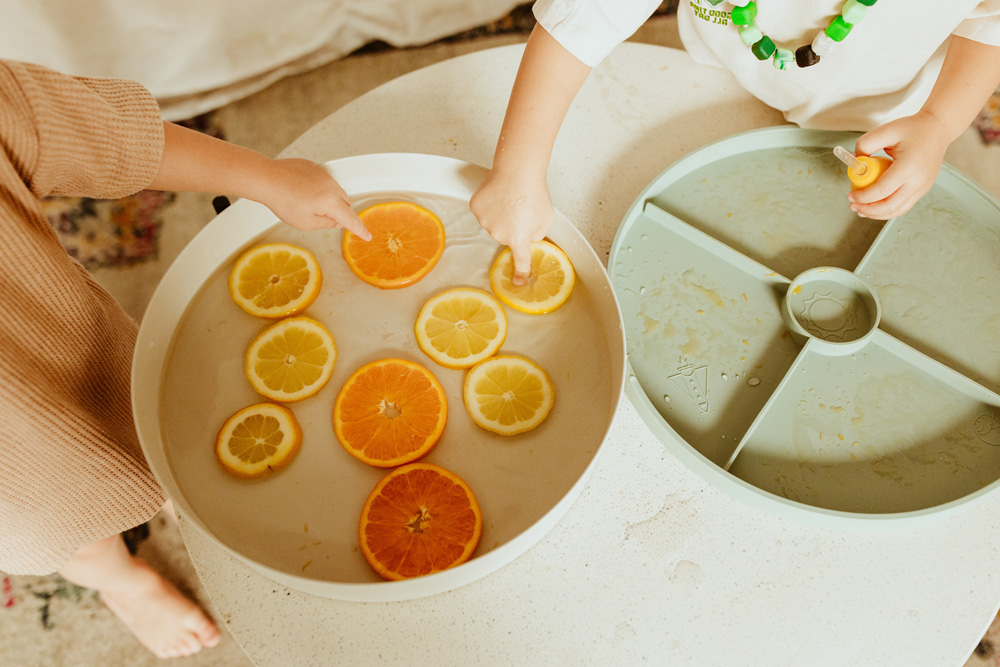
Why it works for an 18-month-old:
Claire says, “This idea is taste-safe (which is important because mouthing is developmentally appropriate at this age).
“The colours gently infuse into the water, creating visual change for little ones to explore. Babies and toddlers also love splashing, squeezing citrus, watching ripples and feeling cool, squishy textures.
“So, this Tray Play idea supports early sensory processing, introduces cause and effect, and encourages simple fine motor movements, without overwhelming your little one.”
Tray Play idea for a three-year-old: Colour sorting with tongs and LEGO
To set up this activity:
- Place the silicone Tray Play lid surface-side up (the compartments make perfect sorting spaces).
- Add a handful of LEGO pieces or other colourful household items.
- Provide a pair of child-friendly tongs for colour sorting.
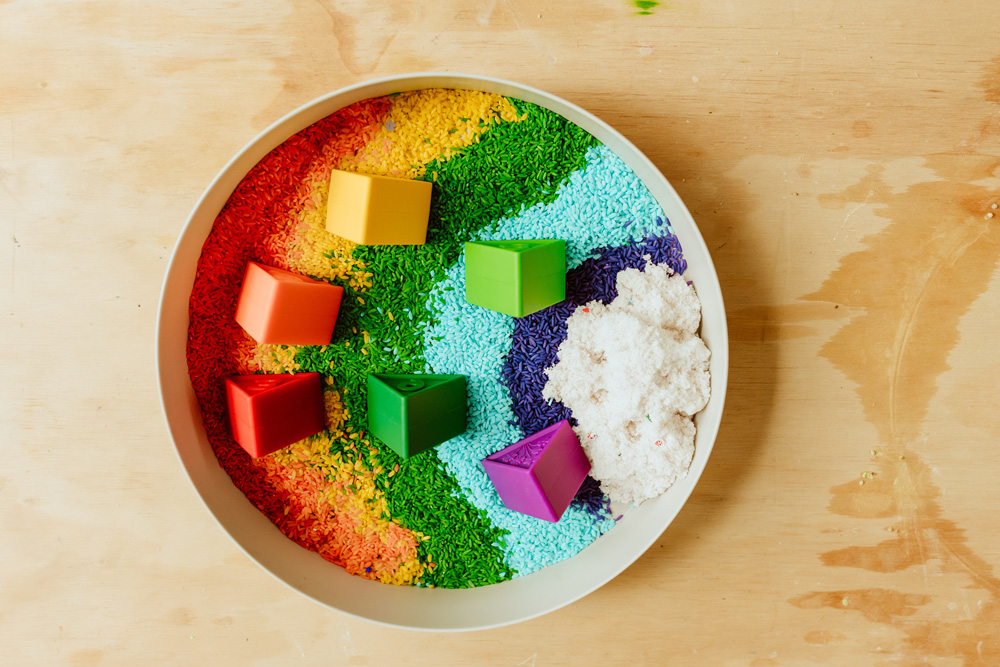
Why it’s engaging at this age:
Claire explains that, “Three-year-olds are naturally drawn to categorising and organising.
“Using tongs strengthens their fine motor muscles and hand-eye coordination; while sorting by colour supports early maths and language development.
“This Tray Play activity will also give your child a sense of control and accomplishment as they complete the ‘challenge’.”
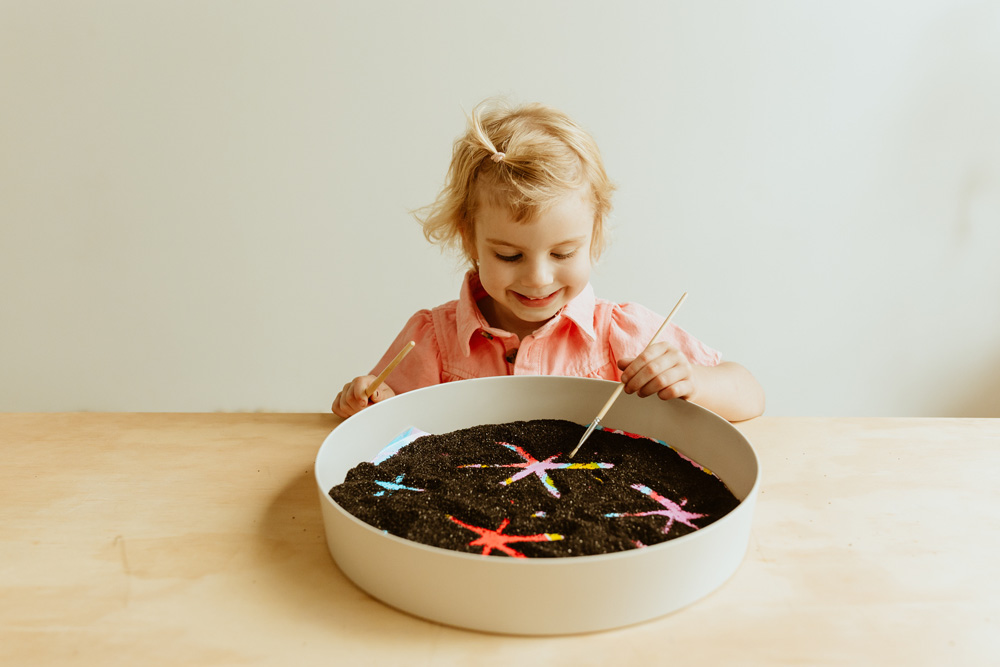
Tray Play idea for a five-year-old: Rainbow salt writing
To set up this activity:
- Colour plain table salt using food colouring or paint powder and let it dry.
- Pour a thin layer into the Tray Play base.
- Add a paintbrush or invite your child to use their finger to draw in the salt.
- Optional: Place a piece of black paper underneath the salt – as your child writes, the contrast creates an eye-catching effect.
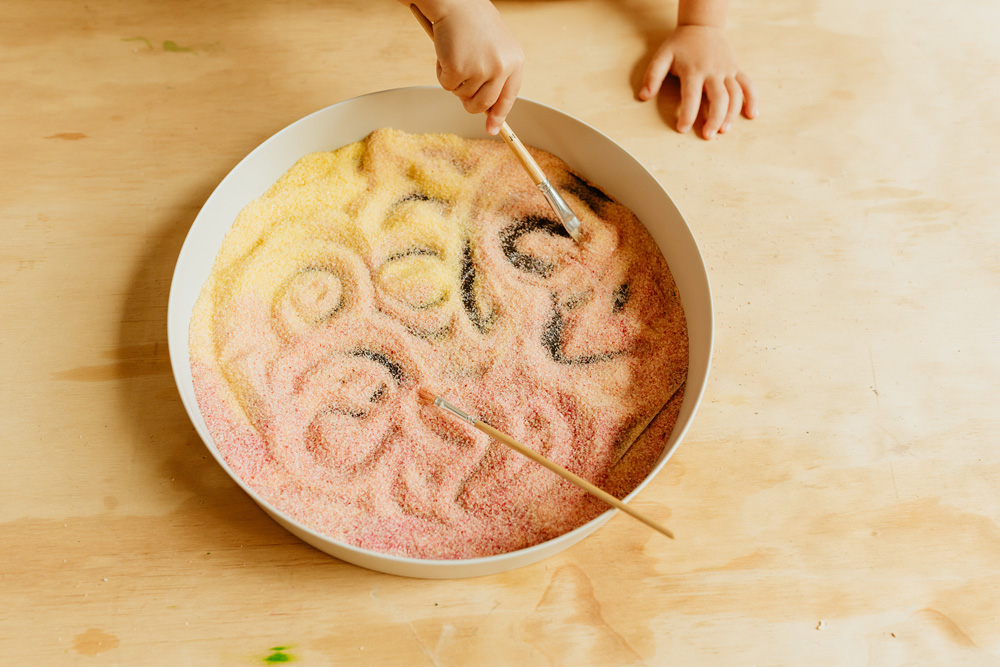
Why it’s perfect for a five-year-old:
Claire says, “Five-year-olds love purposeful play, and salt writing is a fantastic pre-writing activity that supports letter formation, number practise, shape drawing and early literacy.
“The sensory feedback helps cement learning, while the visual effect keeps it highly motivating.
“This activity is calming and creative, and offers a fun way to build some skills needed for school.”
Obviously, these ideas are just the beginning!
You’ll find lots more inspo in the visual play guide that comes with Jellystone Design’s Tray Play.
And as long as you put age-appropriate items in your child’s tray (so, nothing your under-three could choke on), there’s no limit on their Tray Play – just lots of amazing upsides.