


Types of Playgroups
9 playgroups designed for different families.
BY HEJIRA CONVERY, KINDICARE
Playgroup sessions are fun and flexible (just like little kids!), and if your family is looking for the right playgroup fit, then you don’t need to look far!
There are thousands of playgroups buzzing away in the biggest cities and tiniest towns, and every single one of them is designed to meet the needs of its members.
This means that although community playgroups are generally for families with under-fives, and supported playgroups are great for under eights with additional needs, age isn’t the only thing that matters.
There are many community and supported playgroups with specific focuses, and if you have a special interest or particular family dynamic, here are 9 playgroup types that may appeal.
1. Outdoor playgroups.
This kind of community playgroup taps into the big benefits of nature play.
Outdoor playgroups are held in green spaces, like parks and reserves, and give young children limitless opportunities (well, almost limitless…) to investigate, explore, discover and imagine.

Under-fives learn to respect nature and test their boundaries, and your child might like to jump in muddy puddles, wield a stick wand, or sell you a pine cone for the price of one pebble!
2. Language other than English (LOTE) playgroups.
Australia is magnificently multicultural, with about 22% of the population using a language other than English at home, and if you’re keen to share your heritage language with your little one, then a LOTE community playgroup is a great way to do this.
There are playgroups with an Arabic, French, Japanese or other language focus, and these sessions support littlies’ bilingualism (or multi-lingualism) and give parents a chance to chat away in their mother tongue.
3. Playgroups for young parents, single parents, male carers or grandparents.
Community playgroups welcome all kinds of parents and care-givers, however, if you’re a teen mum, divorced dad or grandparent with an active role in your grandchild’s life, you might like to connect with care-givers more like you!
Great friendships can be built on common experiences, and if your child is a bit shy, a smaller group, with familiar-looking families, may help them come out of their shell.
4. Intergenerational playgroups.
Intergenerational care is a big hit in the childcare space, and intergenerational playgroups are equally awesome!
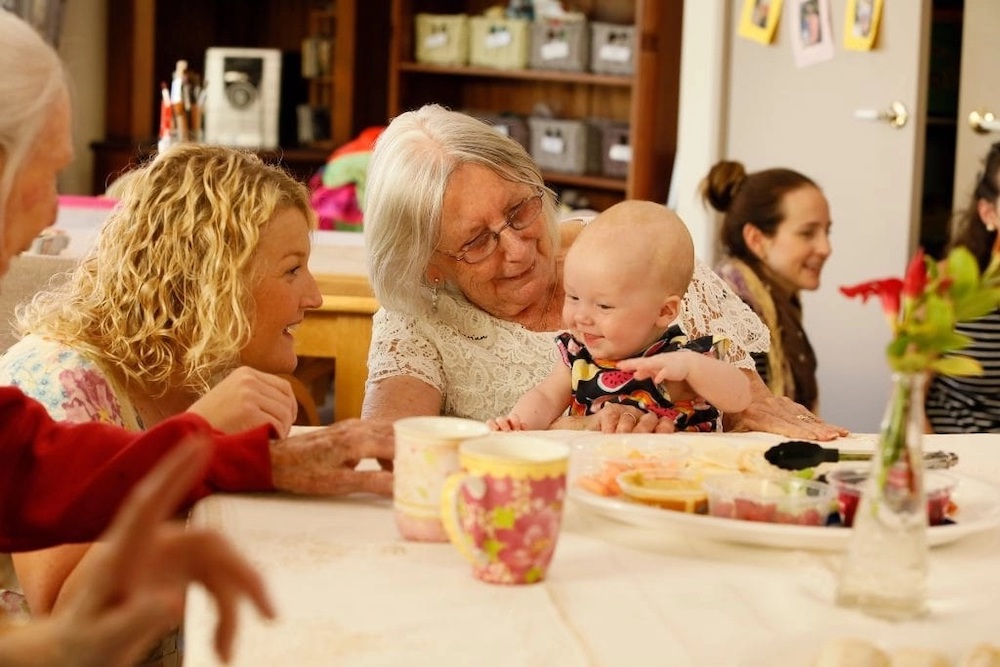
At these sessions, under-fives and senior citizens build relationships through play, and there are benefits for every generation that’s involved – including yours.
There’s always a lot of anticipation and excitement around these community playgroup sessions, and your first cross-generational experience very likely won’t be your last!
5. Aboriginal and Torres Strait Islander playgroups.
There are lots of reasons to find this kind of community playgroup if you’re raising a young Aboriginal or Torres Strait Islander child.
For starters, the connections you make can have a great effect on your family’s health and wellbeing, and there’s evidence that attending playgroup leads to improvements in child development and provides a ‘stepping stone’ to early learning and school.
Excursions, guest speakers and interactive sessions may be part of the program, and even a simple catch-up brings big positives.
6. Rainbow playgroups.
Love is what makes a family, not ‘one mum, one dad and two kids,’ and there are some brilliant community playgroups for lesbian, gay, bisexual, transgender, queer and intersex+ (LGBTQI+) families.

These playgroups (or social groups) provide a regular opportunity to catch up with people who are raising children in a non-nuclear, but equally devoted way, and they provide a chance to share the joys and unique challenges of LGBTQI+ family life.
7. Playgroups for children with cancer and their families.
Dealing with a diagnosis, prognosis and nasty-but-necessary treatment isn’t fun or easy, but if your child has cancer, a community playgroup can give them a little break from all the serious stuff and put a smile on their dial.
This kind of community playgroup is also good for parents.
It’s a safe space where you can share your fears and hopes with people who truly know what you’re going through, because they’re going through it too.
8. Play and Learn Supported (PALS) inclusive playgroups.
Australia is a world leader in supported playgroups, and back in 2020, Playgroup Australia developed the PALS program to bring all families – whatever their abilities – together.
Each session is led by a qualified playgroup facilitator, and whether your child has a disability or not, there are activities to engage and amaze!
Sport, art, culture and recreation are all on the program, and there’s no judgement in these sessions, just pure joy.

9. Playgroups for children with autism or autism-like characteristics.
Mainstream playgroups can be overwhelming for children with neuro-diversity, so we’re happy to report that a brand-new program of supported playgroups, holiday groups, facilitated music groups and digital groups is being rolled out for under eights with disabilities or developmental concerns.
Each family-friendly session will combine playgroup fun and professional expertise to give children the best possible start in life, and there’s more info here.
Finding one (or three) of these amazing playgroups is easy.
All you need to do is click the ‘Find A Playgroup’ link for your state or territory playgroup association and search for the playgroup type/s you’re interested in.
You’ll see that there are loads of different playgroup types to choose from, not just the nine we’ve mentioned.
For instance, you might be interested in a playgroup that’s focused on first time mums, Christian faith, loose parts play or the Montessori educational approach, and the best way to find your playgroup fit, is to search, enquire and visit – just like looking for childcare!
This KindiCare article explains more about how to join a playgroup, and whether you’re looking for fun, friendship, understanding, acceptance or all of the above, playgroup is a brilliant outing for your young family.